10 Easy Felt Projects Sorted by Time and Skill
Ten easy felt projects grouped by how long they take, from 15-minute bookmarks and tags to a fold-over pouch, with a note on what each one teaches.
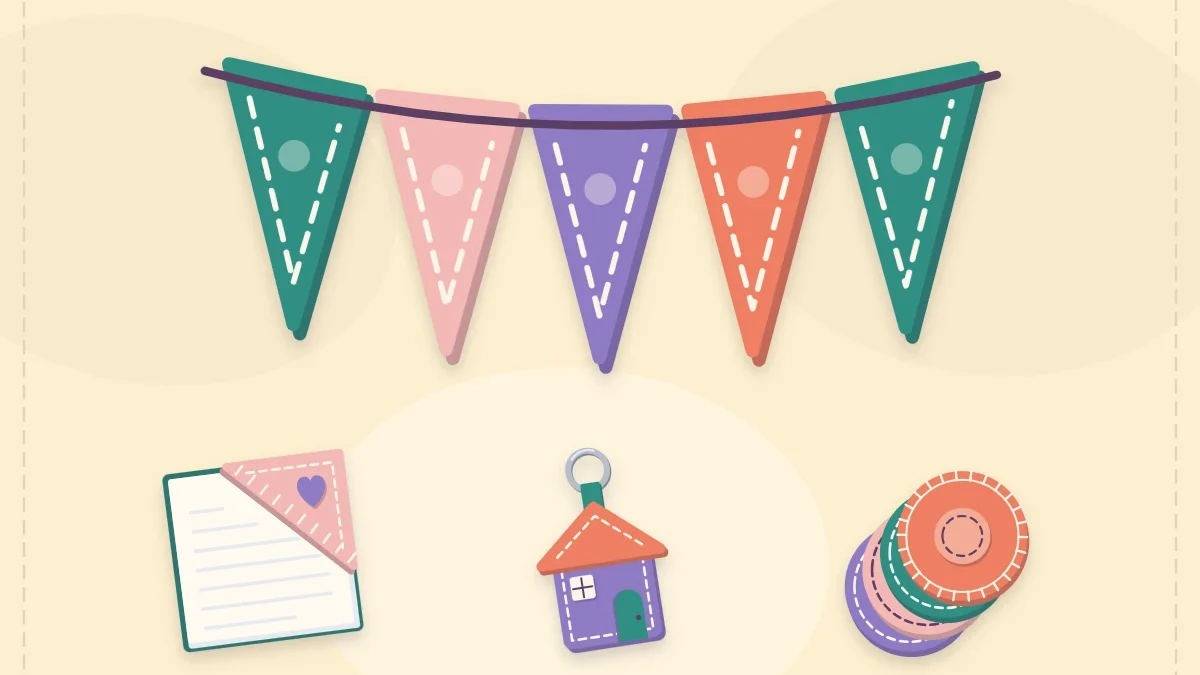
A free half hour, a couple of felt sheets and a pair of sharp scissors are enough to finish something useful. The ten easy felt projects below are sorted by how long they take and how much skill they ask for, starting with pieces that need no needle at all and ending with small sewn items that hold a shape. Each entry says what the project is, roughly how it goes together and which skill it quietly teaches.
Every shape mentioned here comes from simple geometry: circles traced around a glass, rectangles measured with a ruler, hearts cut from folded paper. No printed pattern is required.
How to Pick From These Easy Felt Projects
Three questions narrow the list quickly. How much time is there? Is sewing welcome or not? And is the piece for display, for daily use or for giving away? Items that get handled every day, such as keychains and pouches, should be stitched. Decorations that hang on a wall can be glued. The table gives a quick overview before the details.
| Project | Time | Sewing | Teaches |
|---|---|---|---|
| Strip bookmark | About 15 minutes | Optional | Straight cuts |
| Gift tags | About 15 minutes | Optional | Small shapes, layering |
| Hair bow | About 20 minutes | None | Folding and gluing |
| Round coasters | 30-45 minutes | Edge stitch | Curves, even stitches |
| Corner bookmark | About 30 minutes | Edge stitch | Corners |
| Circle garland | 45-60 minutes | Optional | Repeat cutting |
| Keychain | 45-60 minutes | Edge stitch | Sturdy joins |
| Stuffed ornament | About 1 hour | Edge stitch | Stuffing, closing |
| Needle book | 1-2 hours | Running stitch | A stitched spine |
| Fold-over pouch | 1-2 hours | Side seams | Seams, a closure |
Under 20 Minutes: Cut and Assemble
1. Strip bookmark
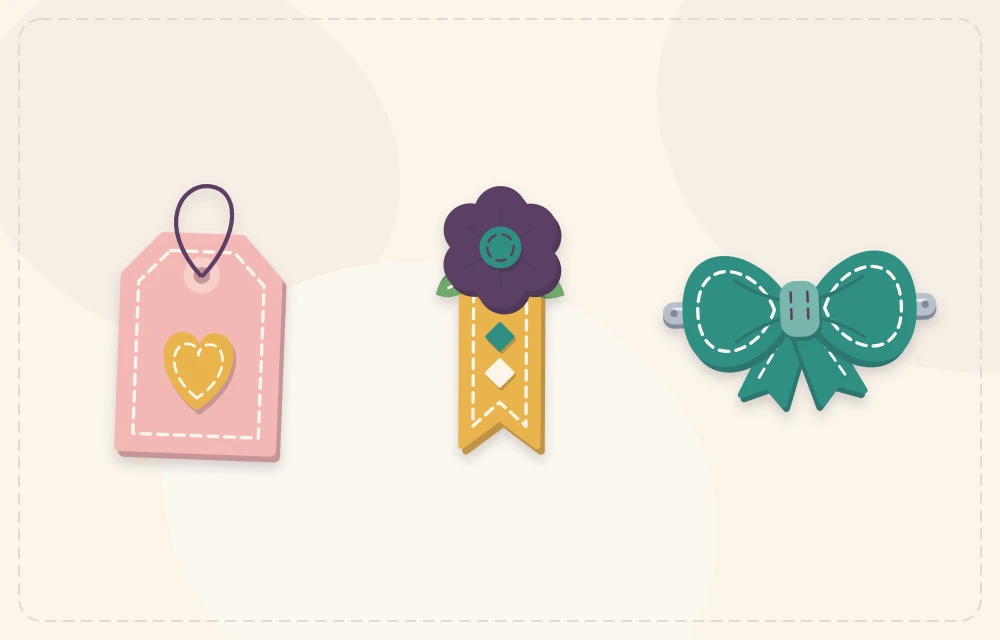
Cut a rectangle 1 1/2 x 7 in (4 x 18 cm) and top it with a small heart, star or leaf glued or stitched to one end. It is the gentlest possible introduction to measuring and cutting a straight line. Pinking shears along the bottom edge add a zigzag finish with no extra work.
2. Gift tags
A rectangle about 2 x 3 1/2 in (5 x 9 cm) with two corners trimmed off becomes a reusable tag. Add a contrasting shape on the front and a ribbon through a small slit at the top. Tags teach layering one piece on another, and they use up scraps.
3. Hair bow
One rectangle 2 x 5 in (5 x 13 cm) is pinched into pleats at the center and wrapped with a narrow strip, then glued shut at the back. It shows how felt holds a fold without pressing. Glue it to a clip, or leave it plain as a topper for a wrapped present.
30 to 60 Minutes: First Stitches
4. Round coasters
Two circles about 4 in (10 cm) across are stacked and stitched around the edge. A set of four gives plenty of practice at keeping stitches the same length and the same distance from the edge. Follow the step-by-step felt coasters tutorial for the round and hexagon versions.
5. Corner bookmark
A 3 in (7.5 cm) square and a triangle cut from a second square are joined along two sides to form a pocket that slips over the corner of a page. It introduces turning a corner neatly with the needle. The felt bookmarks tutorial covers both this pocket style and the strip style above.
6. Circle garland
Twenty to thirty circles, each about 2 in (5 cm) across, are sewn or glued along a length of cord. Cutting the same shape again and again is the fastest way to become consistent with scissors. Spacing and length planning are explained in the felt garland guide.
7. Keychain
Two small matching shapes, a ribbon tab and a split ring make a keychain that survives pockets and bags. Because it is handled constantly, it teaches close, firm stitching. See the felt keychains tutorial for the flat and stuffed versions.
Watch out
Split rings, buttons and beads are small parts and a choking hazard. Projects that include them are not suitable for children under 3.
One to Two Hours: Shapes With Structure
8. Stuffed ornament
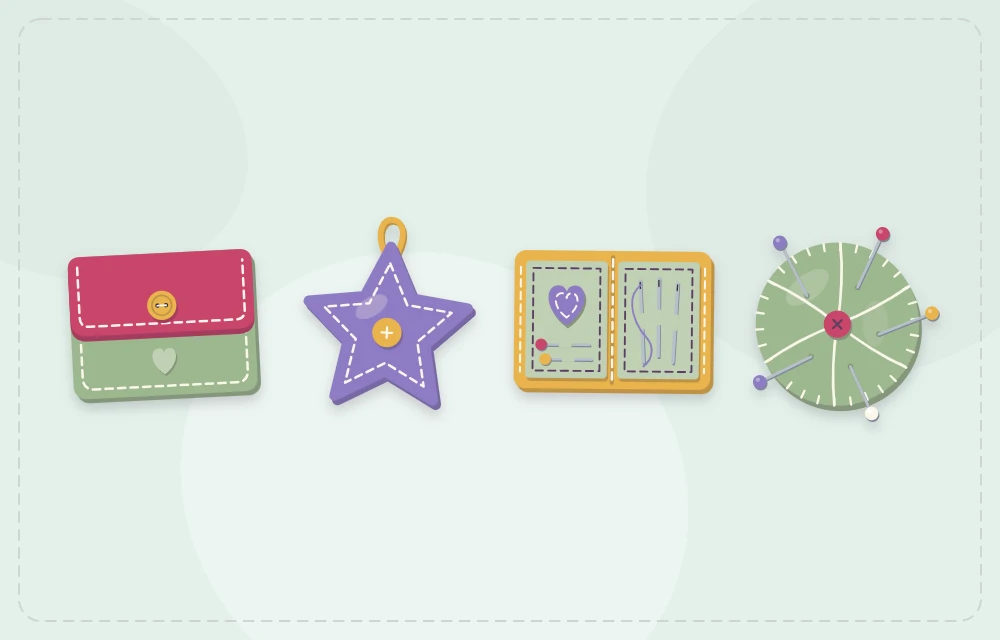
Cut two identical stars, hearts or circles, stitch most of the way around, add a little stuffing and close the gap. A ribbon loop caught in the top seam lets it hang. This is the core method behind most three-dimensional felt pieces, so it is worth making two or three.
9. Needle book
A cover rectangle 4 x 6 in (10 x 15 cm) and two slightly smaller inner pages are stacked and joined with a line of running stitch down the center fold. It keeps needles safe and flat, and it teaches stitching through several layers at once. Trim the pages with pinking shears for a decorative edge.
10. Fold-over pouch
A single rectangle is folded up by two thirds, stitched along both sides and closed with the remaining flap and a button or snap. It is the first project with real seams and a working closure. Size the rectangle to whatever it will hold, adding about 1/2 in (1.3 cm) to the width for the seams.
What Each Project Teaches
Taken in order, the list works as a short course. The first three build cutting accuracy. Projects four to seven add an edge stitch and repeat it until it becomes automatic. The last three bring in stuffing, multiple layers and seams that carry weight. Skipping around is fine, but anyone who has never threaded a needle will find the coasters a kinder start than the pouch.
Tip
Cut all the pieces for two or three small projects in one session and keep each set in its own envelope. A ready-cut project is easy to pick up later for a few minutes of stitching.
Supplies That Cover All Ten
- Felt sheets, 9 x 12 in (23 x 30 cm), in four to six colors
- Sharp fabric scissors, with pinking shears as an optional extra
- Embroidery needles and embroidery floss
- Tacky craft glue or fabric glue
- Pins, a ruler, paper and an erasable fabric pen
- Cord or ribbon, a small bag of stuffing, one button or snap and one split ring
Nothing on this list is specialized, and most of it will last through dozens of projects. Felt scraps left over from the larger pieces are enough for the tags, the bookmark toppers and the bow, so very little goes unused.
Frequently asked questions
What is the easiest felt project to start with?
A strip bookmark or a gift tag. Both are single rectangles with a small shape added on top, and neither needs any sewing.
Can these projects be made without sewing?
The bookmark, tags, bow and garland can all be glued. Items that are handled daily or stuffed, such as keychains, ornaments and pouches, hold up better when stitched.
How much felt do I need to try several projects?
Four to six sheets of 9 x 12 in (23 x 30 cm) felt in mixed colors are enough for most of the list, with scraps left over for small details.