Needle and Thread for Felt: What to Use and When
Embroidery floss, sewing thread or perle cotton? See how many strands to use, which needle type and size fits each thread, and when to match or contrast the color.
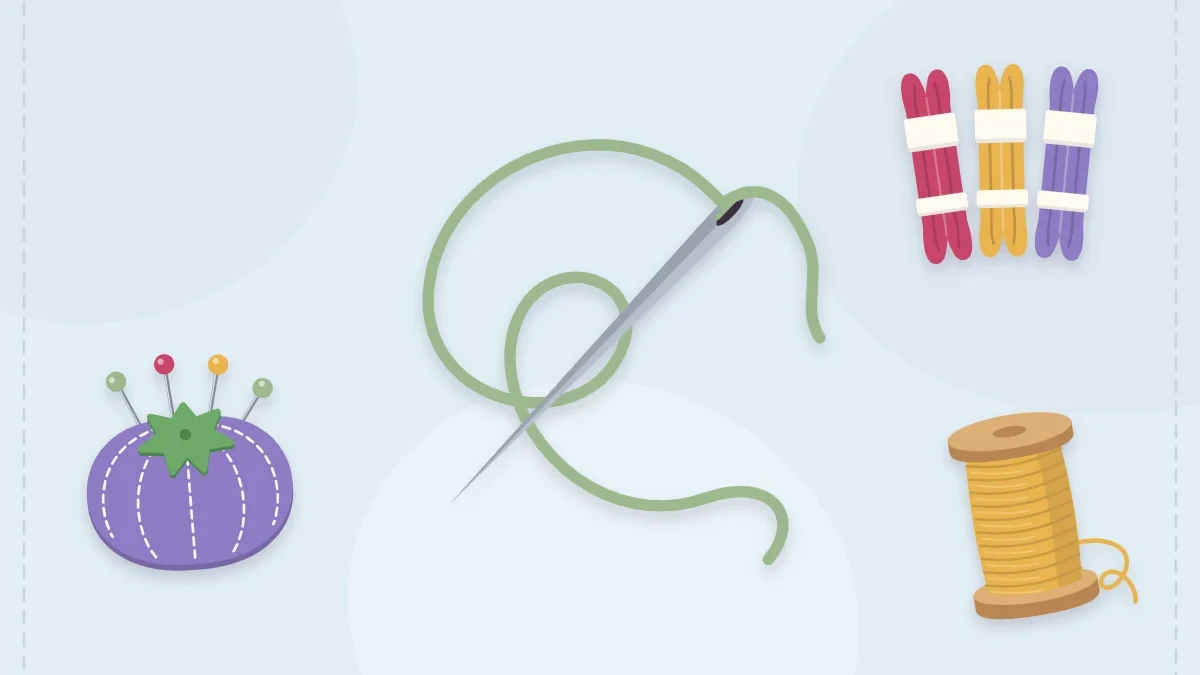
Choosing a needle and thread for felt takes about a minute once you know what the options do, and it changes how every stitch looks. Felt is thick and soft, so thread sits on top of it rather than sinking in. A thread that is too fine vanishes into the fibers; one that is too heavy drags a visible hole behind it.
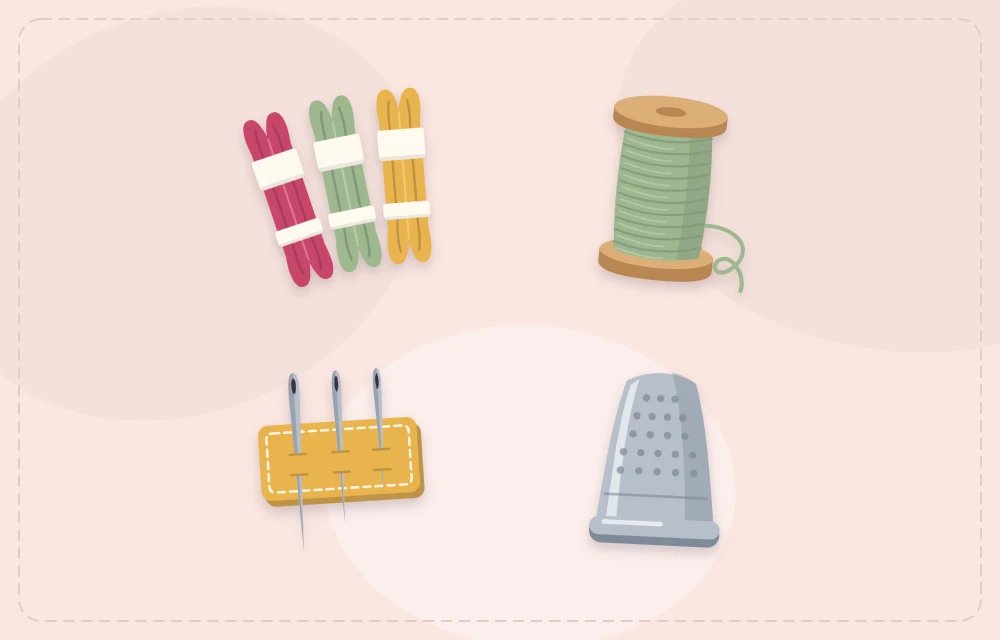
Three kinds of thread cover almost all felt work: stranded embroidery floss, ordinary sewing thread and perle cotton. Each pairs with a particular kind of needle, and the right combination depends on whether the stitches are meant to be seen.
Three Threads Compared
Embroidery floss
Stranded cotton floss is the default for felt. Each length is made of six loosely twisted strands that can be separated, so one skein gives you every weight from a single fine strand to a bold six. It comes in a very wide color range, has a soft sheen and fills the space of a decorative stitch nicely.
Sewing thread
All-purpose polyester or cotton sewing thread is much finer than floss. It is the choice when stitches should disappear: attaching small applique pieces in a matching color, sewing on pin backs, snaps and clips, or closing a seam invisibly. Used single it is nearly invisible; doubled, it is strong enough for hardware.
Perle cotton
Perle (pearl) cotton is a single, tightly twisted, glossy thread that is not meant to be divided. Because of the twist, stitches stand up from the surface with a rounded, rope-like look, and the thread tangles less than floss. It is sold in numbered sizes where a higher number means a finer thread: size 8 is a good match for blanket-stitched edges on small projects, and size 5 is noticeably thicker for bold outlines.
How Many Strands of Floss?
To separate floss, cut a length, hold one end and pull out a single strand straight upward while the rest bunch below; they fall straight again once it is free. Pull strands one at a time and then put the number you want back together. This keeps them smooth and untwisted.
- 1 strand: tiny details such as eyelashes, whiskers and fine outlines.
- 2 strands: the everyday choice. Joining seams, whip stitch, applique and most blanket stitch on small pieces.
- 3 strands: edges that should be clearly visible, French knots and backstitched lines.
- 4 to 6 strands: chunky decorative stitching on larger items such as banners and coasters.
As a rule, the smaller the project, the fewer the strands. A 2 in (5 cm) ornament edged in six strands looks heavy, while a 12 in (30 cm) banner stitched in one strand looks unfinished.
Needle Types and Sizes
Needle sizing runs backward from what most people expect: within each type, a larger number means a finer, shorter needle.
- Embroidery (crewel) needles: sharp point, long oval eye. The long eye takes several strands of floss easily, which makes these the standard needle for felt. Sizes 5 to 7 suit two or three strands; size 3 suits six strands or perle cotton size 5.
- Sharps: sharp point, small round eye. These are general hand-sewing needles for ordinary sewing thread. Use a medium size, around 7 to 9, for attaching hardware and for invisible applique.
- Chenille needles: sharp point, very large eye, thicker shaft. Useful for heavy perle cotton or thick felt, though they leave a larger hole.
Avoid tapestry needles for felt. They look like chenille needles but have a blunt tip designed to slip between canvas threads, and pushing one through felt takes real effort.
A mixed pack of embroidery needles in sizes 3 to 9 covers nearly every project. Test the fit before starting: the thread should pass through the eye without fraying, and the needle should slide through two layers of felt with light pressure. If it needs a hard push, go one size finer; if the thread wears at the eye, go one size larger.
Needle and Thread for Felt: Quick Reference
| Task | Thread | Needle |
|---|---|---|
| Joining two layers with whip or blanket stitch | Floss, 2 strands | Embroidery, size 5 to 7 |
| Bold decorative edge | Floss, 3 to 4 strands, or perle cotton size 8 | Embroidery, size 3 to 5 |
| Small applique, nearly invisible | Sewing thread, single, matching color | Sharps, size 8 or 9 |
| Fine face details | Floss, 1 to 2 strands | Embroidery, size 7 to 9 |
| French knots | Floss, 3 strands | Embroidery, size 5 |
| Pin backs, snaps, clips, buttons | Sewing thread, doubled | Sharps, size 7 or 8 |
| Thick felt or chunky outlines | Perle cotton size 5 or floss, 6 strands | Chenille or embroidery size 3 |
Matching or Contrasting Color
Thread that matches the felt hides uneven spacing, which is forgiving while your stitches are still settling into a rhythm. If an exact match is not available, choose a shade slightly darker than the felt; darker thread recedes, while lighter thread stands out.
Contrast thread turns the stitching into decoration. Cream on red, or dark gray on a pastel, outlines the shape and gives a hand-finished look, but every stitch is on display. It suits an even blanket stitch on a simple outline better than a fiddly shape with tight curves.
Thread Length and Handling
Cut thread about 18 in (45 cm) long, roughly the distance from fingertips to elbow. It is tempting to cut more and avoid re-threading, but a long thread is pulled through the felt so many times that it frays, loses its sheen and knots itself. Thread that is too long is one of the most common felt craft mistakes, and the cure is simply to start a new length more often.
Tip
If the floss twists as you sew, let the needle hang freely from the work for a few seconds. It will spin and unwind on its own.
- Trim the end at an angle with sharp scissors before threading, and flatten multi-strand floss between finger and thumb.
- If a knot forms mid-stitch, slide the needle tip into the loop and ease it open instead of pulling tight.
- Keep needles in a pincushion or a felt needle book, and count them back in when you finish. Supervise children whenever needles are out.
Try It on a Scrap First
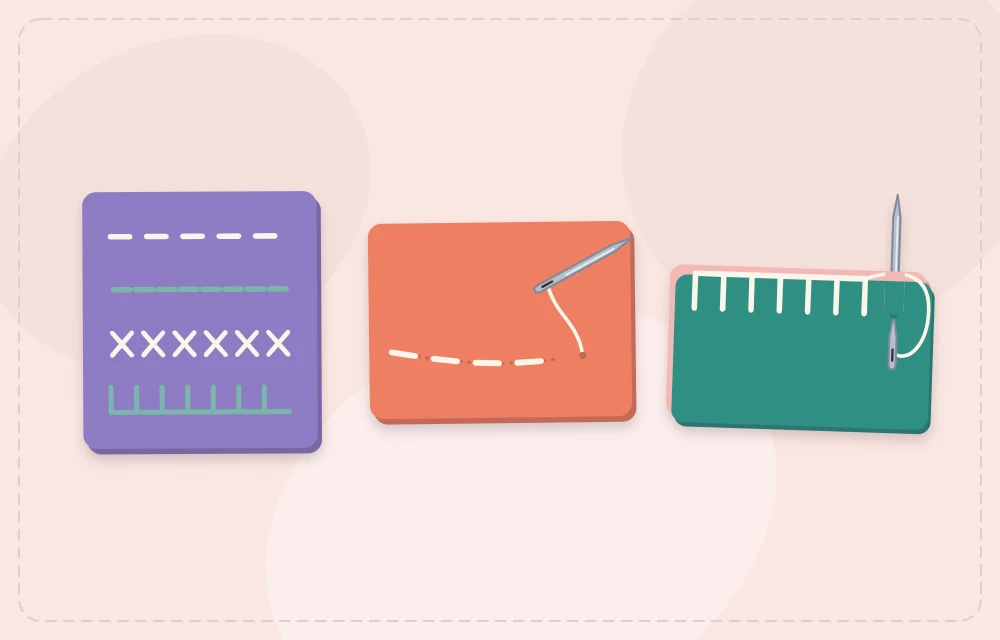
Before committing to a project, stitch three short rows on an offcut of the same felt: one with a single strand, one with two and one with three. Step back an arm’s length and choose the row that suits the size of the piece. The basics of threading, knotting and the first stitches are covered in hand sewing felt, which makes a good next step once the needle and thread are chosen.
Frequently asked questions
How many strands of embroidery floss should I use on felt?
Two strands suit most seams and small projects. Use one strand for fine details and three or more when the stitching should stand out as decoration.
Can I use regular sewing thread on felt?
Yes. It is best for stitches that should not show, such as small applique in a matching color, and doubled for sewing on pin backs, snaps and buttons.
What needle is best for sewing felt by hand?
An embroidery (crewel) needle in size 5 to 7. It has a sharp point to pierce felt and a long eye that takes two or three strands of floss.
Why does my thread keep tangling?
It is usually too long or has twisted during stitching. Cut lengths of about 18 in (45 cm) and let the needle hang now and then so the thread can unwind.