
Why Choosing the Right Pickleball Paddle for Beginners Matters
A pickleball paddle for beginners can make the difference between falling in love with the sport and quitting after a few frustrating sessions. The wrong paddle can make the ball feel impossible to control. The right one makes every shot feel more natural from day one.
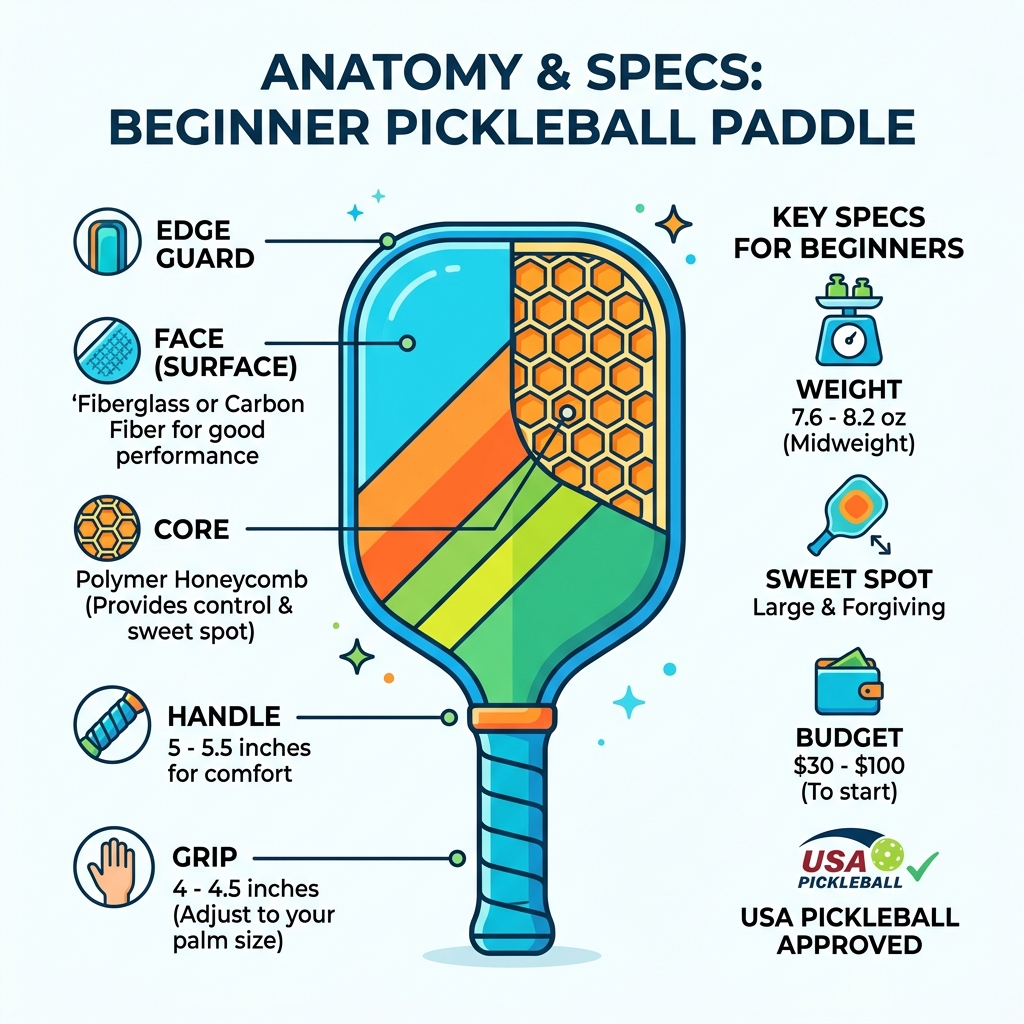
Here is a quick overview of what to look for:
| Feature | Beginner Recommendation |
|---|---|
| Weight | Midweight: 7.6 – 8.2 oz |
| Grip circumference | 4 – 4.5 inches (measure your palm) |
| Handle length | 5 – 5.5 inches |
| Surface material | Fiberglass or carbon fiber |
| Core | Polymer honeycomb |
| Sweet spot | Large and forgiving |
| Budget | $30 – $100 to start |
| USA Pickleball approved | Yes, for tournament eligibility |
Pickleball has exploded in popularity – and with that boom comes a flood of paddle options that can overwhelm any new player. If you are rated between 1.0 and 3.5 on the USA Pickleball skill scale, you are officially a beginner. That means you need a paddle that forgives off-center hits, gives you control over power, and does not break the bank.
The good news? You do not need to spend a lot to get a great first paddle. A solid beginner setup can cost as little as $30 for a two-paddle set, or around $50-$100 for a quality individual paddle that will last through your early development.
This guide walks you through every specification – weight, grip, shape, materials, and budget – so you can buy with confidence.
Key Specifications of a Pickle Ball Paddle for Beginners
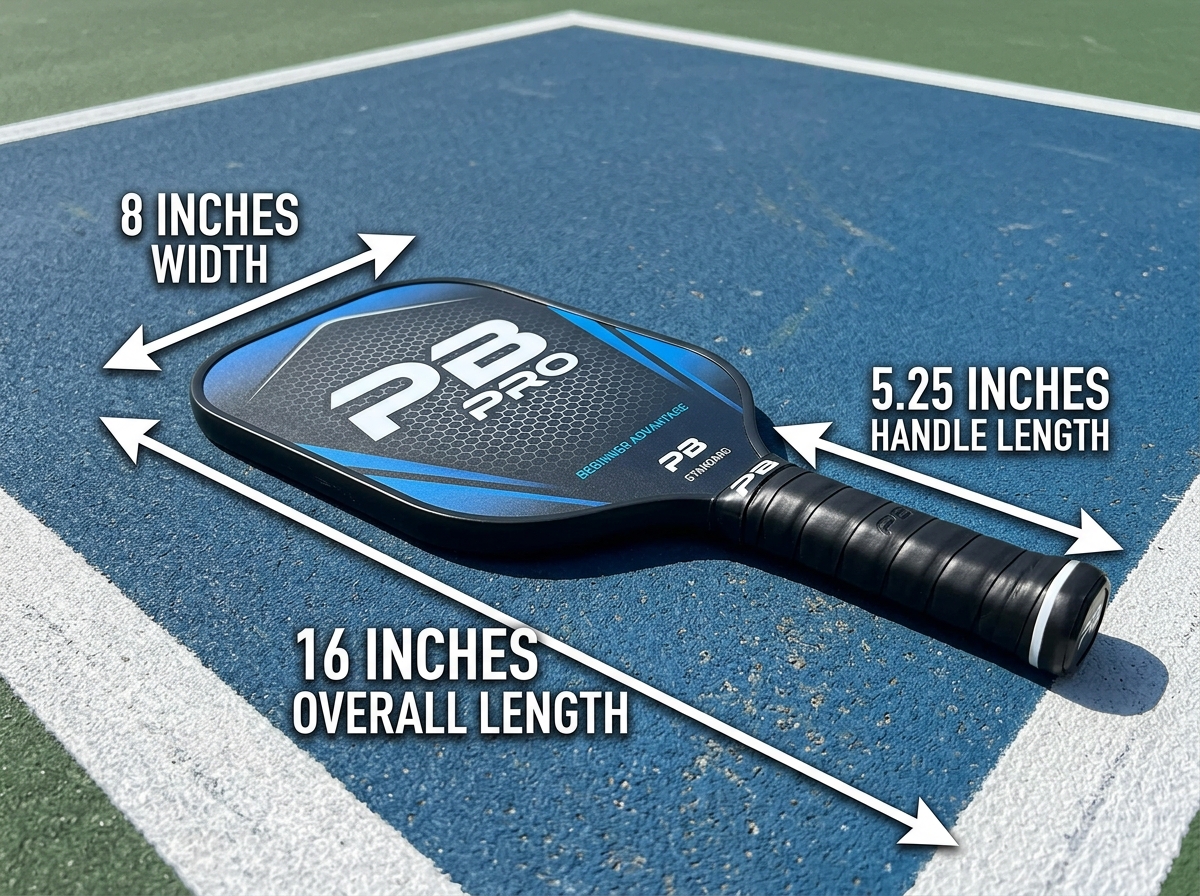
When we first step onto the court, most of us just want to hit the ball over the net. However, the technical specs of your gear dictate how much effort that actually takes. USA Pickleball has strict rules: a paddle cannot be longer than 17 inches, and the combined length and width cannot exceed 24 inches. Most standard paddles settle around 16 inches long and 8 inches wide.
Weight Categories: Finding Your “Goldilocks” Zone
Weight is arguably the most critical factor for a pickle ball paddle for beginners. It is generally classified into three categories:
- Lightweight (7.6 oz and under): Great for quick “kitchen” exchanges and reducing arm fatigue. However, you have to swing harder to generate power.
- Midweight (7.6 – 8.2 oz): The “Goldilocks” zone for most new players. It offers a perfect balance of stability and maneuverability.
- Heavyweight (8.2 oz and over): These provide massive power with less effort but can lead to elbow strain if your technique isn’t polished yet.
Handle and Grip Basics
The handle length usually ranges from 5 to 5.5 inches. A longer handle (like on the SLK Evo Power XL 2.0) is great if you are transitioning from tennis and like a two-handed backhand. A shorter handle provides a larger hitting surface area, which is very helpful when you are still learning to find the “sweet spot.”
To help you decide, we have put together a quick reference table:
| Paddle Trait | Impact on Beginner Play |
|---|---|
| Heavier Weight | More power, but harder on the wrist/elbow. |
| Lighter Weight | More control and faster at the net, but less “plow-through.” |
| Thicker Core (16mm) | Absorbs energy; better for “touch” shots and dinking. |
| Thinner Core (10-13mm) | More “pop” and power; less forgiving on mistakes. |
For more depth on how these factors affect specific demographics, you might find our guide on Navigating Pickleball Paddle Weights: A Guide for Senior Players helpful.
Measuring Grip Size for a Pickle Ball Paddle for Beginners
If your grip is too small, the paddle might twist in your hand. If it’s too large, it can cause hand cramps. For most beginners, the ideal grip circumference is between 4 and 5 inches.
A simple way to measure this at home is the “Palm Crease Test.” Open your hitting hand and look at the three major creases in your palm. Measure from the tip of your ring finger straight down to the middle crease. That measurement in inches is your ideal grip size. If you are between sizes, go with the smaller one; you can always add an overgrip to make it thicker, but you can’t make a thick handle thinner!
Proper sizing is vital for long-term comfort and injury prevention. We recommend reading our detailed breakdown on Understanding Pickleball Paddle Grip Size for Seniors to ensure a perfect fit.
Selecting the Best Shape for a Pickle Ball Paddle for Beginners
Paddles aren’t just rectangles; their geometry changes how they play.
- Standard/Widebody: Usually 16″ x 8″. This is the best pickle ball paddle for beginners because it offers the largest sweet spot. It is very forgiving if you don’t hit the ball perfectly in the center.
- Elongated: These are longer (up to 17″) and narrower. They offer more reach and power (leverage), but the sweet spot is smaller and further from your hand.
- Hybrid: A mix of both, often featuring rounded corners to balance speed and surface area.
For those just starting, we usually suggest a widebody face to maximize forgiveness. You can explore more about these options in our Lightweight Pickleball Paddles: A Guide for Senior Beginners.
Choosing the Right Materials and Construction
The “guts” of the paddle matter just as much as the shape. Most modern paddles use a honeycomb core made of polymer (a fancy word for plastic). This material is durable and relatively quiet.
Core Technology
- Polymer Honeycomb: The industry standard. It’s great for beginners because it balances power and control.
- Foam-Injected Walls: Some newer beginner-friendly paddles, like the Friday Original, use foam around the edges. This increases the “twist weight,” meaning the paddle stays stable even if you hit the ball near the edge.
Surface Materials
The surface (or “face”) is what touches the ball.
- Fiberglass (Composite): Found on many entry-level paddles like the JOOLA Essentials. It is more flexible than carbon fiber, giving the ball a “trampoline effect” for easy power.
- Carbon Fiber / Graphite: These are stiffer. They provide a “dead” feel that actually gives you more control because the ball doesn’t go flying off unexpectedly.
Understanding these nuances is key to progressing. We’ve written extensively on this in Decoding Pickleball Paddle Materials for Beginners.
Budgeting and Buying Your First Gear
How much should you actually spend? It is tempting to buy the $250 pro-model used by world number one Ben Johns, but that might actually hurt your game. Pro paddles are often “unforgiving”—they require perfect technique to work well.
Price Ranges
- The “Starter” Set ($30 – $60): You can often find bundles that include two fiberglass or wood paddles and a few balls. This is a great “low-risk” way to try the sport.
- The “Serious Beginner” ($60 – $100): This is the sweet spot. Brands like SLK (by Selkirk) or the 11SIX24 Pegasus Jelly Bean offer high-quality materials that will last you a year or more as you improve.
- The “Investment” ($100 – $150): If you know you’re going to play 3-4 times a week, a paddle like the Honolulu Sword & Shield J2NF is a fantastic choice. It features foam-core technology that stays “lively” longer than cheaper options.
For a deeper dive into saving money while getting quality gear, check out our guide on Budget-Friendly Pickleball Gear for Beginners.
Frequently Asked Questions about Beginner Paddles
Are all beginner paddles USA Pickleball approved?
Not necessarily. While most reputable brands (Selkirk, JOOLA, Friday) ensure their paddles are USAPA-approved, some very cheap sets found on massive online marketplaces are not. If you ever plan to play in a local tournament, look for the “USA Pickleball Approved” seal on the paddle face. For casual backyard play, it matters less, but approved paddles generally meet higher quality standards.
What is the best paddle for kids or youth players?
Kids have smaller hands and less shoulder strength. Look for “Junior” series paddles, such as the Oneshot Juniorshot Series. These feature thinner grips (often under 4 inches) and much lighter weights (around 6-7 oz) to prevent injury and make the game fun for toddlers and children under 12.
How often should I replace my first paddle?
Most beginner paddles last 6 to 12 months with regular play. You’ll know it’s time to upgrade when:
- The “Grit” is gone: The surface feels smooth, and you can’t get any spin on the ball.
- The “Dead Spot”: If you tap the paddle and it sounds like dull wood in certain areas, the internal honeycomb core may have collapsed.
- Skill Progression: If you find yourself consistently hitting the ball too hard or needing more “touch,” you may have outgrown your beginner paddle’s power-focused fiberglass face.
Conclusion
Choosing your first pickle ball paddle for beginners doesn’t have to be a headache. If you stick to a midweight paddle with a standard shape and a grip that fits your hand, you are already ahead of the curve. The best paddle is the one that stays in your hand because you’re having too much fun to put it down!
At Voce Economia, we are dedicated to helping you navigate racket sports without overspending. Once you’ve picked your paddle, don’t forget that the ball you use matters just as much for your practice sessions.
Ready to gear up? Explore More info about equipment services to find the rest of your starter kit. See you on the courts!
