
The Real Difference Between Indoor and Outdoor Pickleballs
Why the Pickleball Balls Difference Actually Matters for Your Game
The pickleball balls difference comes down to five key factors: hole count, hole size, weight, plastic hardness, and durability. Here’s a quick breakdown:
| Feature | Indoor Ball | Outdoor Ball |
|---|---|---|
| Number of holes | 26 (larger) | 40 (smaller) |
| Avg. hole diameter | ~0.43 inches | ~0.282 inches |
| Weight | 0.78–0.855 oz | 0.90–0.935 oz |
| Plastic hardness | Softer | Harder |
| Best for | Gym floors, controlled settings | Asphalt, wind, rough surfaces |
| Durability | Longer lasting | Cracks faster, especially in cold |
To most people, a pickleball just looks like a colorful Wiffle ball. And honestly, that’s not far off — the sport actually started with a Wiffle ball back in 1965 on Bainbridge Island. But today’s pickleballs are precisely engineered, and the type you use has a real impact on how the game feels.
If you’re just starting out and struggling with balls that bounce weird, break after a few sessions, or feel impossible to control — there’s a good chance you’re using the wrong ball for your court.
Indoor and outdoor pickleballs are built differently on purpose. The environment you play in changes everything: wind, surface texture, temperature, and lighting all affect how a ball behaves. Using the wrong type doesn’t just hurt your game — it makes learning harder than it needs to be.
The good news? Once you understand what separates these two ball types, picking the right one is simple.
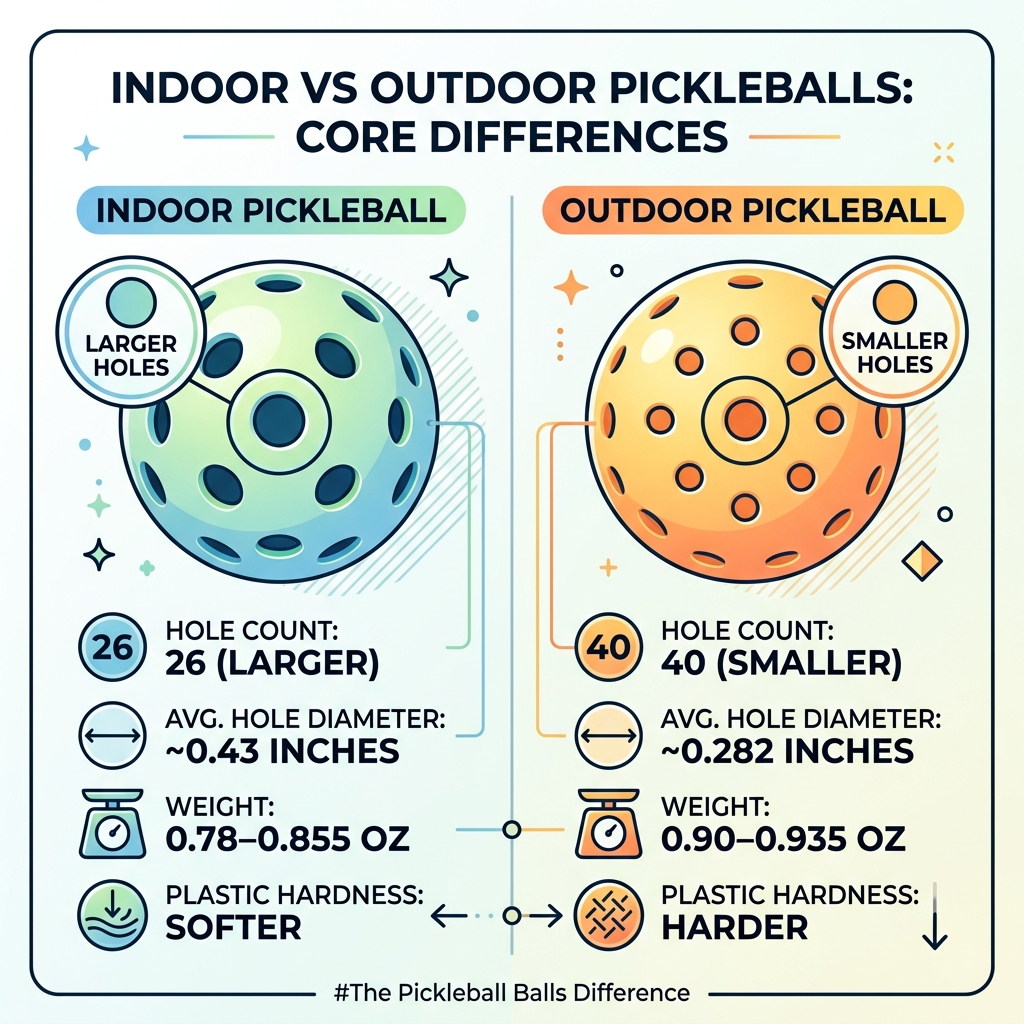
Quick look at pickleball balls difference:
Core Physical Specs: The Pickleball Balls Difference
When we look at the pickleball balls difference from a technical perspective, it isn’t just about color or brand names. There are strict metrics established by the USA Pickleball official website that every manufacturer must follow to get their equipment “Approved.”
According to the USA Pickleball Official Equipment Standards, a legal ball must weigh between 0.78 and 0.935 ounces and have a diameter between 2.87 and 2.97 inches. While that sounds like a narrow window, the way that weight and space are distributed makes all the difference in the world.
Hole Count and Diameter
The most obvious visual pickleball balls difference is the holes. Indoor balls typically feature 26 large holes. These holes average about 0.43 inches in diameter. On the flip side, outdoor balls usually have 40 smaller holes, with an average diameter of 0.282 inches—that is roughly 40% smaller than their indoor cousins!
Why the change? It’s all about air. More, smaller holes help the ball maintain its trajectory when a gust of wind tries to take it for a ride. Fewer, larger holes create more drag, which keeps the ball slower and more manageable in a gym setting.
Plastic Hardness and Construction
We often talk about the “Shore D scale” when discussing plastic hardness. Outdoor balls are made of harder, thicker polymers (like polypropylene). They need to be tough to survive the “cheese grater” effect of asphalt and concrete courts.
Indoor balls use softer materials like low-density polyethylene (LDPE). This makes them quieter and gives them a “squishier” feel on the paddle. Most high-quality balls today use injection molding or rotational molding. Rotational molding is particularly cool because it creates a seamless construction. Without a seam, the ball is perfectly balanced and won’t “egg” or split down the middle as easily.
How Environment Shapes Performance
If you’ve ever tried to play with an indoor ball on a windy day, you know that it feels like trying to hit a soap bubble. The pickleball balls difference becomes incredibly apparent the moment you step outside.
Wind Resistance and Drag
Aerodynamics is the name of the game. Outdoor balls are heavier (averaging 0.925 oz) and have those 40 tiny holes to minimize wind interference. This weight helps them “cut” through the air. Indoor balls are lighter (averaging 0.917 oz) and have high drag coefficients due to their large holes. In a controlled gym, this is great for long, strategic rallies. In the wind? It’s a nightmare.
Court Surfaces: Asphalt vs Wood
The surface you play on dictates the bounce. Indoor courts are often polished wood (like a basketball court) or synthetic tile. These surfaces are slick, so indoor balls are designed with a softer plastic to “grip” the floor and provide a consistent 30–34 inch bounce when dropped from 78 inches.
Outdoor courts are usually asphalt or concrete with an acrylic coating. These are abrasive. A soft indoor ball would be chewed up in minutes on these surfaces. Harder outdoor balls provide a faster, higher bounce that matches the aggressive nature of outdoor play. If you’re looking for the right gear to start with, check out our guide on finding the best pickleball balls for beginners.
Temperature, Humidity, and Altitude
Temperature is the secret enemy of the pickleball. In cold weather (below 45°F), the hard plastic of an outdoor ball becomes brittle. We’ve seen balls crack after just one hard overhead smash in the winter! Conversely, extreme heat can make balls “mushy,” reducing their bounce.
Altitude also plays a role. At high altitudes, the air is thinner, meaning less drag. Some manufacturers actually make “High Altitude” balls with slightly different weights or hole patterns to ensure the ball doesn’t fly out of bounds on every serve.
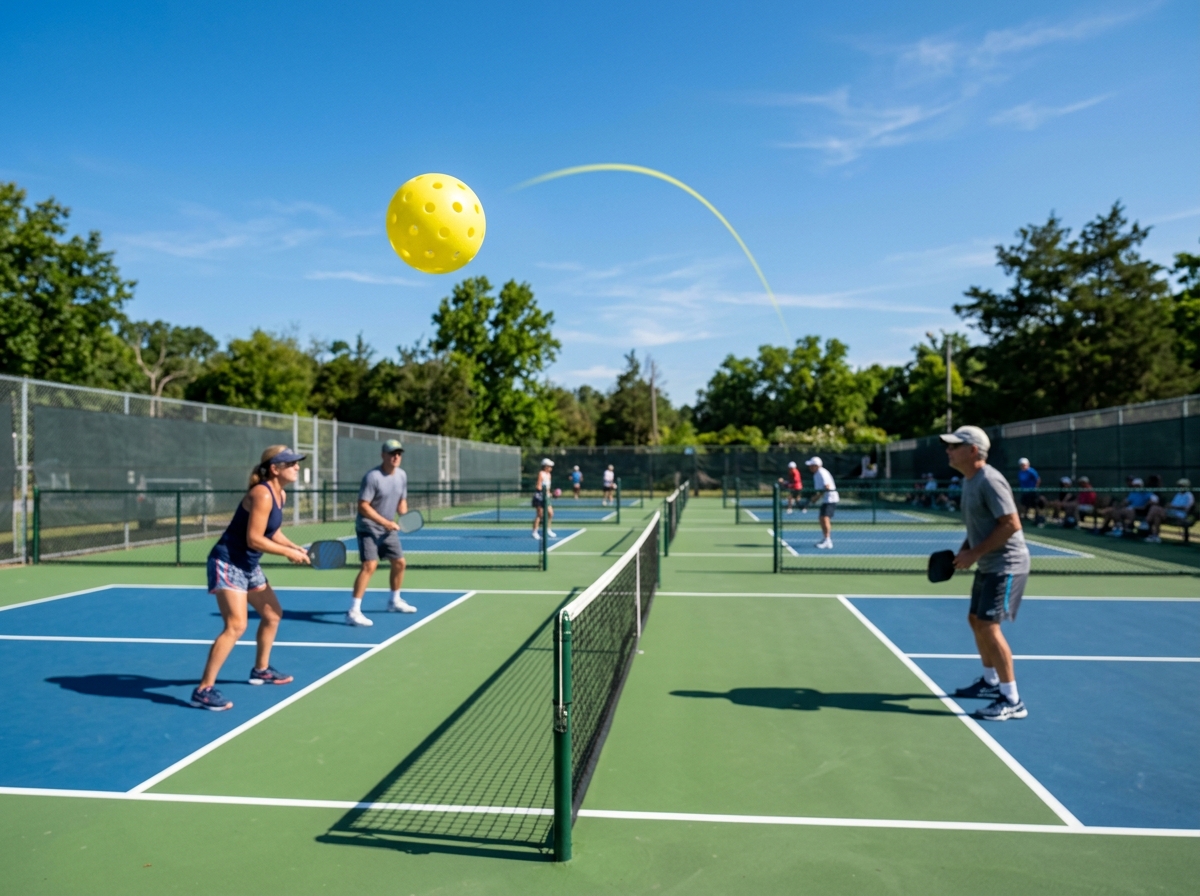
Durability and Lifespan Factors
Let’s be real: no pickleball lasts forever. But the pickleball balls difference extends to how—and when—they die.
The Death of a Ball: Cracking vs. Softening
Outdoor balls usually die by cracking. Because the plastic is harder and the court surface is rougher, the material eventually reaches its fatigue point. You’ll notice a tiny hairline fracture starting at one of the holes, or the ball will suddenly make a “thud” sound instead of a “ping.”
Indoor balls are different. Because they are softer, they rarely crack. Instead, they “go soft.” Over time, the plastic loses its elasticity, and the ball stops bouncing as high as it used to. It becomes “dead.”
Maintenance and Storage Tips
To extend the life of your balls, we recommend a few simple habits:
- Avoid Extreme Temps: Don’t leave your gear bag in a freezing car or a boiling trunk. Store them at room temperature.
- Clean Regularly: Dust and grit from outdoor courts act like sandpaper. Rinse your balls with warm water and air dry them to keep the surface smooth.
- Ball Rotation: Don’t just play with one ball until it breaks. Rotate through a set of 3 or 4 during a session to distribute the wear and tear evenly.
- Visual Inspection: Before every game, look for flat spots or warping. A ball that isn’t perfectly round will bounce unpredictably, which is frustrating for everyone.
Choosing the Right Ball for Your Skill Level
Your choice of ball should match your goals. Are you looking for a fun afternoon at the rec center, or are you training for a local tournament?
Understanding the Indoor Pickleball Balls Difference
If you are playing in a gymnasium, you want an indoor ball. The pickleball balls difference here is all about control. Because indoor balls are slower and have more “give,” they are fantastic for beginners. They allow for longer rallies and give you more time to react to the ball.
The softer plastic also makes them significantly quieter—a big plus if you’re playing in a facility with echoing walls. For those just starting their journey, we have a deep dive into finding the best pickleball balls for beginners 2 that covers the specific models we love for gym play.
Navigating the Outdoor Pickleball Balls Difference
Outdoor play is generally faster and more “power-heavy.” The harder polymers used in outdoor balls allow for higher speeds and more aggressive spin. If you plan on playing in tournaments, you must practice with outdoor balls, as almost all sanctioned competitive play happens outdoors or on “outdoor-style” surfaces.
Visibility is also a major factor outdoors. While indoor balls are often light green or orange, outdoor balls favor “Optic Yellow.” This bright neon color provides the best contrast against dark asphalt and blue skies, helping your reaction time during fast volleys.
Frequently Asked Questions about Pickleball Balls
Can I use indoor balls outdoors and vice versa?
Technically, yes, but we wouldn’t recommend it. If you take an indoor ball outside, even a light breeze will blow it off course. Plus, the rough concrete will wear down the soft plastic in record time.
If you take an outdoor ball inside, it will bounce way too high on the hard floor, and it can be quite slippery on a wooden gym surface. It’s like wearing hiking boots to a ballet recital—you can do it, but it’s going to be awkward for everyone involved.
Why do outdoor balls have more holes than indoor balls?
It comes down to the physics of wind resistance. The 40-hole pattern on outdoor balls creates a turbulent boundary layer of air around the ball, which actually helps it stay stable in the wind. The 26-hole pattern on indoor balls is designed for maximum drag in still air, which keeps the speed manageable for the smaller, more technical indoor game.
How do I know when it is time to replace my pickleball?
Keep your ears and eyes open!
- The Sound Test: If the ball makes a flat “thud” instead of a crisp “pop,” it’s likely cracked or soft.
- The Roll Test: Roll the ball across a flat floor. If it wobbles or veers off, it’s warped.
- The Squeeze Test: Give it a firm press with your thumb. If it feels mushy or stays indented, it’s time for the trash.
- The Bounce Test: Drop it alongside a brand-new ball. If it doesn’t reach the same height, it’s lost its “life.”
Conclusion
Understanding the pickleball balls difference is one of the easiest ways to improve your experience on the court. Whether you are seeking the soft, controlled touch of an indoor 26-hole ball or the fast, wind-defying power of an outdoor 40-hole model, matching your equipment to your environment is key.
At Voce Economia, we believe that the right gear makes the game accessible to everyone. By choosing the correct ball, you’ll find that your serves are more consistent, your rallies last longer, and you’ll spend less money replacing broken equipment.
Ready to level up the rest of your kit? Explore more pickleball equipment guides to find the perfect paddles, shoes, and bags for your next match. See you on the court!
