
The Great Debate of Wood vs Fiberglass Paddles
The Classic Showdown: Wood vs Fiberglass Pickleball Paddle
If you’re trying to decide between a wood vs fiberglass pickleball paddle, here’s the short answer:
| Factor | Wood Paddle | Fiberglass Paddle |
|---|---|---|
| Weight | 7.5–9.5 oz (heavier) | 6.7–8.4 oz (lighter) |
| Power | Decent, but absorbs energy | Superior energy transfer |
| Control | Good tactile feedback | Larger sweet spot |
| Spin | Limited | Better surface grip |
| Durability | Moisture-sensitive | More resistant |
| Price | $10–$50 | $40–$150 |
| Best for | Beginners, casual play | Intermediate to advanced |
Wood paddles are great if you’re just starting out and want an affordable, forgiving option. Fiberglass paddles are the better upgrade once you’re ready to add more power and spin to your game.
Pickleball was literally invented with wooden paddles. Back in the 1960s, the game’s co-founders picked up scraps of plywood and started hitting a ball around — and a sport was born. For decades, wood was the only option on the court.
A lot has changed since then.
Today’s players have a wide range of paddle materials to choose from. But for beginners, the choice usually comes down to two options: traditional wood or modern fiberglass. Both are accessible, affordable-ish, and widely available — but they play very differently.
The material your paddle is made from affects almost everything: how hard you can hit, how much control you have, how your arm feels after an hour of play, and even the sound the ball makes on contact.
Choosing the wrong paddle early on can make learning the game harder than it needs to be. That’s why understanding the difference matters — especially when you’re still building the basics.
Material Science: Wood vs Fiberglass Pickleball Paddle Construction
When we talk about a wood vs fiberglass pickleball paddle, we are really looking at a battle between traditional craftsmanship and modern aerospace engineering. The way these paddles are put together dictates every “pop” and “thud” you hear on the court.
The Anatomy of Wood
Traditional wooden paddles are typically constructed from high-quality hardwoods like maple or birch. To prevent them from being just a heavy slab of lumber, manufacturers often use plywood layers—thin sheets of wood glued together with the grain running in different directions. This cross-graining adds strength and helps prevent the paddle from snapping during a high-intensity overhead smash. Some modern “wood composite” paddles actually use a thin wooden veneer over a different core, but the classic entry-level paddle is usually solid, multi-layered wood.
The Modern “Sandwich” Method
Fiberglass paddles (often referred to in the industry as “composite” paddles) use what we call the “sandwich method.” In this construction, a lightweight honeycomb core is encapsulated between two thin sheets of fiberglass.
- The Face: Fiberglass is created by weaving glass fibers into a cloth and then soaking it in resin. It is more flexible than carbon fiber, which allows the ball to sink into the paddle slightly before “springing” off. This flexibility is a key aspect of scientific research on fiberglass material properties, which highlights its high strength-to-weight ratio.
- The Core: The most common core material is polymer (polypropylene), a plastic-like material with large honeycomb cells. Other options include Nomex (an ultra-stiff, paper-like material coated in resin) or aluminum.
If you want to dive deeper into the nitty-gritty of these components, we recommend decoding pickleball paddle materials for beginners to see how different cores change the feel of the fiberglass face.
Hybrid Options
Recently, we’ve seen the rise of hybrid paddles. These might combine a fiberglass face with carbon fiber layers or even Kevlar to try and capture the best of both worlds: the power of fiberglass and the control of more rigid materials. While wood remains largely a standalone material, fiberglass is the “SUV” of the paddle world—versatile and frequently modified.
Performance Metrics: Weight, Power, and Maneuverability
Weight is perhaps the most immediate difference you will feel when holding a wood vs fiberglass pickleball paddle. In pickleball, even a single ounce can feel like a pound after the third set of a long afternoon.
The Weight Gap
Wooden paddles are the heavyweights of the sport, typically weighing in between 7.5 and 9.5 ounces. Some older models can even exceed 10 ounces. Fiberglass paddles are significantly leaner, usually ranging from 6.7 to 8.4 ounces.
| Metric | Wood Paddle | Fiberglass Paddle |
|---|---|---|
| Average Weight | 7.5 – 9.5+ oz | 6.7 – 8.4 oz |
| Power Potential | High (due to mass) | High (due to flex/pop) |
| Swing Speed | Slower | Faster |
| Sweet Spot | Small/Inconsistent | Large/Forgiving |
Why Weight Matters
A heavier wood paddle acts like a large ship cutting through water; it has a lot of momentum. This means you don’t have to swing as hard to get the ball to move, but it also means your reaction time at the kitchen line (the “no-volley zone”) will be slower.
Fiberglass paddles, being lighter, offer much better maneuverability. This is crucial for senior players or anyone worried about joint strain. If you’re concerned about how weight affects your joints, check out our guide on navigating pickleball paddle weights: a guide for senior players. A lighter fiberglass paddle allows for quicker “reset” shots and faster volleys at the net.
Power Generation
There’s a common misconception that heavier always equals more power. While the mass of a wood paddle helps with energy transfer, fiberglass actually provides more “pop.” Because the fiberglass face is flexible, it acts like a trampoline, storing energy upon impact and snapping back to propel the ball forward at higher speeds.
Gameplay Dynamics and Sensory Feedback
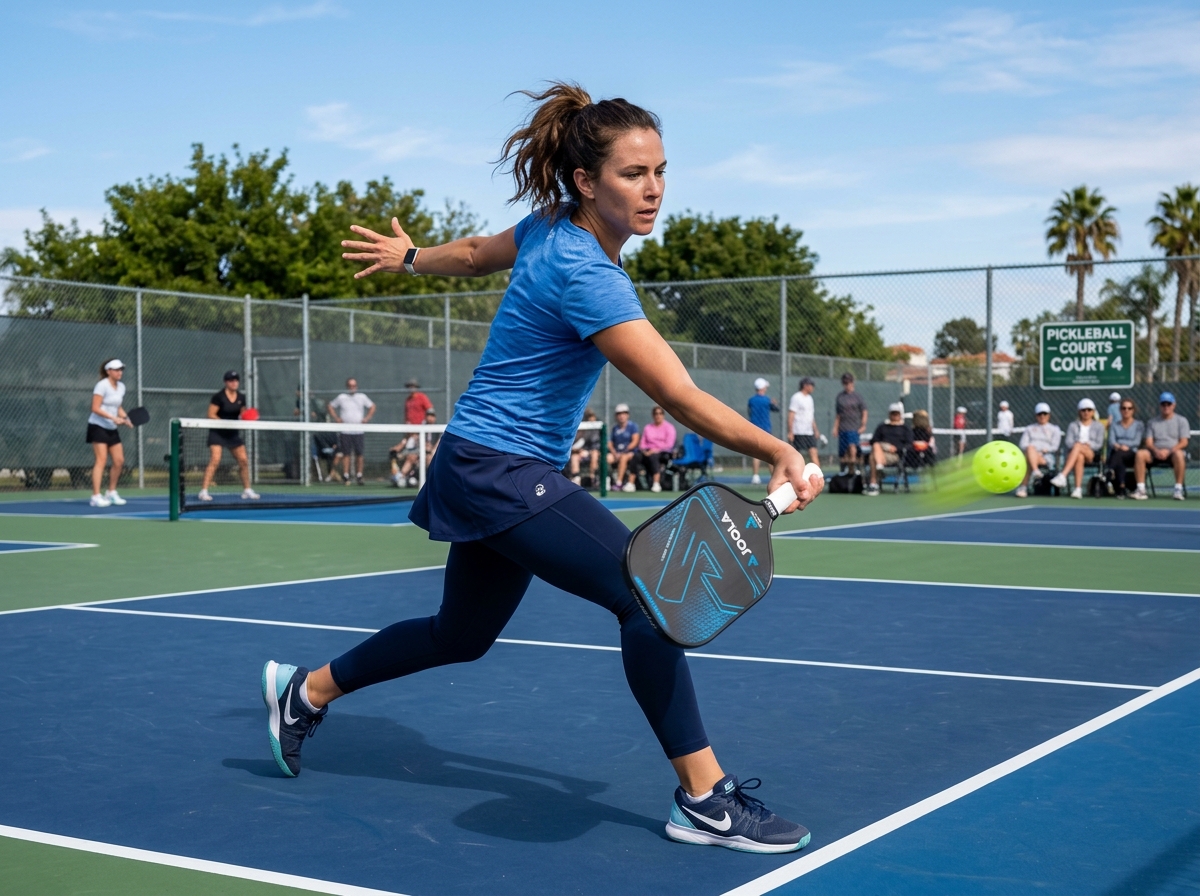
How a paddle “feels” is subjective, but there are clear scientific reasons why a wood vs fiberglass pickleball paddle provides different feedback to your hands.
Tactile Feedback and Vibration
Wood offers a very direct, natural feel. When you hit the ball, you feel the vibration move straight through the handle. For some beginners, this tactile feedback is helpful because it tells them exactly where they hit the ball on the face.
Fiberglass paddles, especially those with polymer cores, are designed for vibration damping. They absorb the shock of the ball, which is much “cleaner” but can sometimes feel a bit disconnected to a player used to the raw feedback of wood.
The Sweet Spot and Forgiveness
This is where fiberglass really shines. Because of the honeycomb core construction, fiberglass paddles have a much larger “sweet spot”—the area on the paddle face that produces a consistent shot. If you hit a ball near the edge of a wooden paddle, it will likely “thud” and die. On a fiberglass paddle, that same off-center hit might still clear the net.
If you find your paddle feels a bit “dead” on the edges, you might consider a beginner’s guide to customizing your paddle with weight tape to expand that sweet spot, though this is usually more effective on composite paddles than solid wood ones.
Sound Profiles: Pop vs. Thud
If you play at a local park, you can usually tell what someone is playing with just by listening.
- Wood: Produces a loud, resonant “pop” or “clack.” It’s a nostalgic sound that veteran players often love, but it can be loud enough to bother neighbors in noise-sensitive areas.
- Fiberglass: Produces a softer, more muffled “thwack” or “thud,” especially when paired with a polymer core. This makes it much more suitable for indoor play or communities with strict noise ordinances.
Control and Spin in a Wood vs Fiberglass Pickleball Paddle
Control is about finesse—dinks, drop shots, and placement. Wood is surprisingly good for control because its weight stabilizes the paddle, but it lacks the surface “bite” needed for modern spin.
Fiberglass faces often come with a textured grit (sometimes called an abrasion surface). This texture creates friction between the paddle and the ball, allowing you to “grab” the ball and pull it upward for topspin or sideways for a slice. While carbon fiber is the king of spin (generating about 15-20% more than fiberglass), fiberglass still outperforms wood significantly in this category. It is important to note that all paddles used in competitive play must adhere to USA Pickleball equipment standards regarding surface roughness and deflection.
Durability, Maintenance, and Environmental Impact
No one wants to buy a paddle that falls apart after a month. When comparing a wood vs fiberglass pickleball paddle, durability is a double-edged sword.
The Weakness of Wood
Wooden paddles are incredibly sturdy against physical impacts—you can drop them on concrete and they likely won’t crack. However, they are the “Kryptonite” of moisture. Humidity and rain can cause the wood layers to warp or the glue to fail, leading to delamination.
- Maintenance Tip: We recommend applying a light coat of mineral oil to wooden paddles every few months and storing them in a dry, climate-controlled environment (not the trunk of your car!).
The Resilience of Fiberglass
Fiberglass is much more resistant to environmental factors. It won’t warp in the humidity. However, the face can chip or “dead spots” can develop in the honeycomb core over time with heavy use. A high-quality fiberglass paddle typically lasts between 3 and 24 months depending on how often you play.
Environmental Footprint
If sustainability is important to you, wood is often the winner. When sourced through sustainable forestry practices, wood is a renewable resource with a lower manufacturing carbon footprint. Fiberglass, on the other hand, requires high-energy industrial processes and resin chemicals that are harder to recycle. To make your gear last longer and reduce waste, it’s important to learn how to choose your first pickleball without losing your mind, as using the right ball can actually reduce unnecessary wear on your paddle face.
Making the Final Decision
Choosing between a wood vs fiberglass pickleball paddle ultimately comes down to your budget and how serious you are about the sport.
Budget Considerations
- Wood: The most budget-friendly entry point. You can find decent wooden paddles for $10 to $50. They are perfect for families, community centers, or “just trying it out” sessions.
- Fiberglass: A step up in investment, ranging from $40 to $150. While more expensive (often 3.5x the price of wood), the performance boost is usually worth the cost if you plan to play more than once a week.
Professional Recommendations
Most coaches suggest that while wood is a great “day one” tool to help you understand the weight of the ball and the mechanics of a swing, you should transition to a composite paddle as soon as you decide to play regularly. Professional players almost exclusively use composite materials (fiberglass, graphite, or carbon fiber) because the competitive game moves too fast for the heavy, slow-reacting nature of wood.
Wood vs Fiberglass Pickleball Paddle: Which is Best for Beginners?
For an absolute beginner, we often recommend starting with wood. Why? Because the weight of the paddle forces you to use your whole arm and shoulder rather than “flicking” your wrist, which helps build better foundational habits. However, if you have any history of tennis elbow or shoulder pain, skip the wood and go straight to a lightweight fiberglass model.
If you are ready to make your first purchase, our the ultimate guide to picking your first pickleball paddle can walk you through the final selection process.
Frequently Asked Questions about Paddle Materials
Which material is better for players with tennis elbow?
Fiberglass is significantly better. Because it is lighter (6.7–8.4 oz vs wood’s 7.5–9.5+ oz), it puts much less strain on the tendons in your elbow. Additionally, the honeycomb cores in fiberglass paddles absorb more vibration, whereas wood sends those vibrations directly into your arm.
Can wooden paddles be used in sanctioned tournaments?
Yes, as long as they meet the USA Pickleball (USAP) standards for size, surface roughness, and deflection. However, you will rarely see them in tournament play because they are a competitive disadvantage compared to the power and spin of fiberglass and carbon fiber.
How often should I replace a fiberglass paddle?
For a casual player (once a week), a fiberglass paddle can last 2 years. For a “pickleball addict” playing 4-5 times a week, you might notice the “pop” start to fade after 6 to 12 months as the core breaks down.
Conclusion
The debate over a wood vs fiberglass pickleball paddle isn’t about which one is “better” in a vacuum—it’s about which one is better for you right now.
If you are looking for a nostalgic, durable, and ultra-affordable way to get the family out on the court, wood is a fantastic choice. It connects you to the roots of the game and provides a solid, honest feel. But if you want to keep up with the volleys of the modern game, generate spin that makes your opponents sweat, and protect your joints from fatigue, fiberglass is the clear winner.
At Voce Economia, we want to make sure you have the right gear to enjoy every minute on the court. Whether you choose the classic “pop” of wood or the modern “snap” of fiberglass, the most important thing is to get out there and play!
Ready to round out your gear bag? Explore more pickleball gear and equipment guides to find the perfect balls, shoes, and accessories for your game.
