
The Essential Starter Kit for New Pickleball Players
Why the Right Gear Makes All the Difference When Starting Pickleball
Pickleball equipment for beginners doesn’t have to be complicated — here’s what you actually need to get started:
| Equipment | What to Look For |
|---|---|
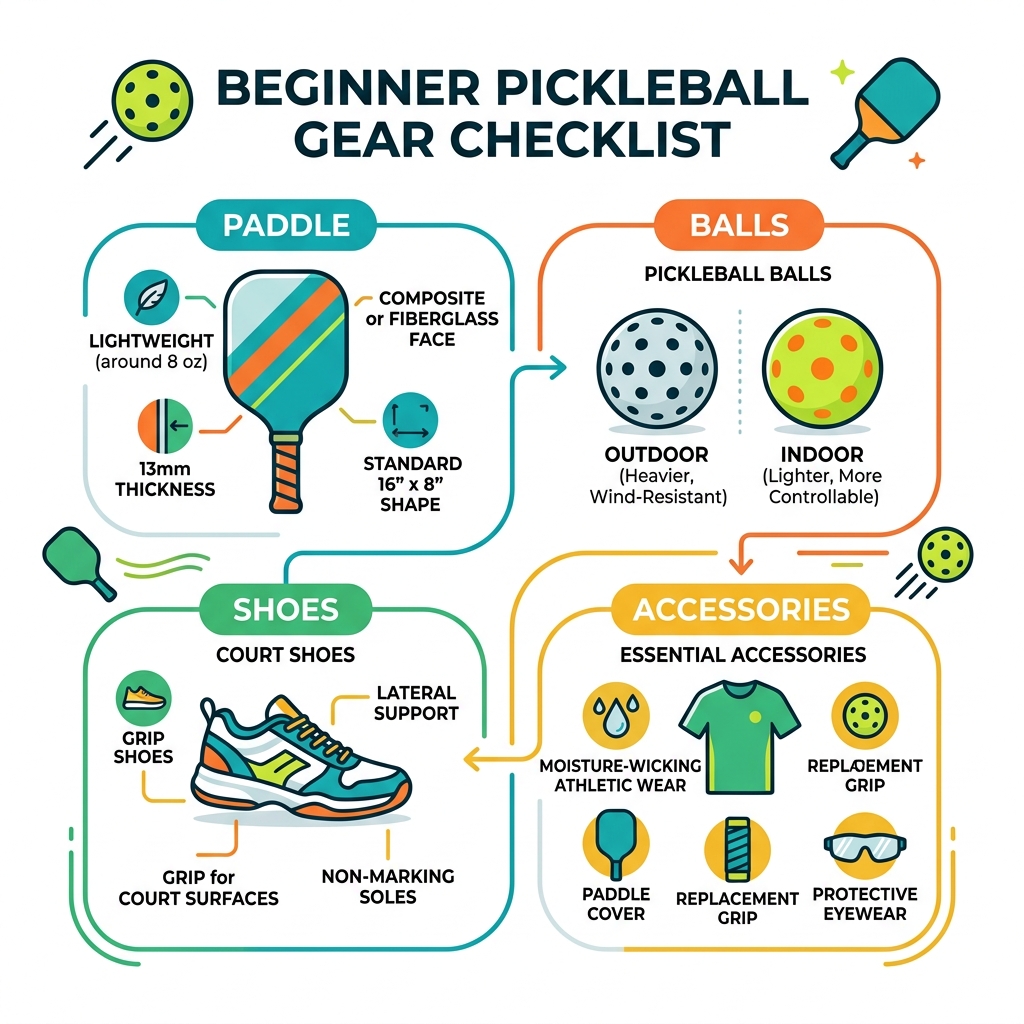
| Paddle | Composite or fiberglass face, 13mm thickness, standard 16″ x 8″ shape, ~8 oz weight |
| Balls | Indoor (lighter, larger holes) or outdoor (heavier, wind-resistant) |
| Shoes | Court shoes with lateral support, grip, and non-marking soles |
| Clothing | Lightweight, moisture-wicking, non-restrictive athletic wear |
| Optional | Paddle cover, replacement grip, protective eyewear |
Pickleball has been around since 1965, invented near Seattle as a backyard game. For six decades it stayed relatively niche — and then it exploded. It’s now one of the fastest-growing sports in the US, drawing in players of all ages and backgrounds.
That growth means more products, more choices, and more confusion for new players trying to figure out what to buy first.
The good news? You don’t need much to start. And you definitely don’t need to spend a fortune.
A solid paddle, the right balls, and proper footwear are the core of any beginner setup. Everything else is optional. The biggest mistake new players make is either buying cheap gear that breaks fast or overspending on advanced equipment before they’ve even learned their playing style.
This guide cuts through the noise and walks you through exactly what to buy, what to skip, and what to look for at every price point.
Essential Pickleball Equipment for Beginners
When we first step onto a pickleball court, the sheer variety of gear can feel overwhelming. However, the essentials boil down to four main categories: the paddle, the balls, the right shoes, and comfortable athletic clothing.
Choosing the right pickleball equipment for beginners is about finding a balance. You want gear that is forgiving enough to help you learn the mechanics but durable enough to last through your first few seasons of play. Many new players start with a comprehensive list to ensure they aren’t missing anything. If you are looking for a detailed breakdown, The Comprehensive Pickleball Equipment Checklist for Seniors offers a fantastic roadmap for players of all ages.
What is a Pickleball Starter Kit?
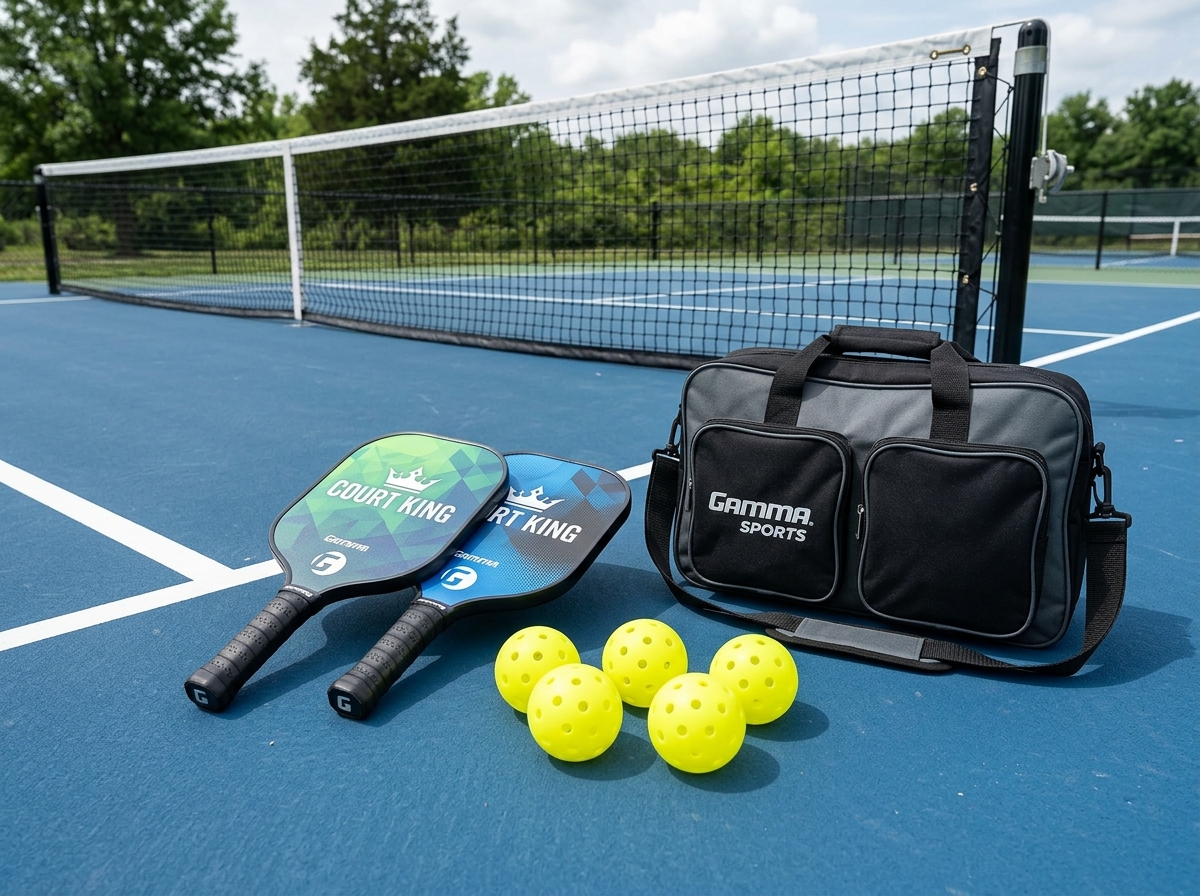
For most of us, the easiest way to get into the game is by purchasing a starter kit. These bundles typically offer incredible value compared to buying items individually. A standard kit usually includes two paddles, a few balls, and a convenient sling bag to carry everything.
For example, the Spinwave Pickleball Beginner Kit is a popular choice because it includes a high-quality 16mm control paddle and tournament-grade balls. Other excellent options include the ONIX Pickleball Starter Set: Z1 Paddles and Ball Kit, which is specifically designed for two players to hit the court immediately.
If you’re eager to start playing with a partner, check out our guide on the Best Beginner Pickleball Sets to Get You on the Court Fast. These sets are “plug-and-play” solutions that take the guesswork out of your first purchase.
Budgeting for Pickleball Equipment for Beginners
How much should you expect to spend? You don’t need a “pro” budget to enjoy this sport.
- Entry-Level Sets: You can find basic wooden or thin composite sets for as low as $30–$50.
- Mid-Range Kits: High-quality starter bundles from reputable brands like JOOLA or Gearbox usually fall between $70 and $130.
- Individual Paddles: A good beginner-to-intermediate paddle typically costs between $60 and $100.
We always recommend avoiding the absolute cheapest “no-name” paddles found on massive discount sites, as they often lack the “sweet spot” necessary to learn proper ball control. For more tips on saving money without sacrificing quality, read our article on Budget-Friendly Pickleball Gear for Beginners. If you’re planning to practice at home, you might also want to look into Choosing the Best Beginner Pickleball Sets for Home Use.
Choosing Your First Paddle: Materials and Weight
The paddle is the most important piece of pickleball equipment for beginners. Modern paddles are a marvel of engineering, usually featuring a honeycomb polymer core sandwiched between two faces. This design creates a lightweight yet strong surface that provides a “pop” when hitting the ball.
When shopping, look for the “USA Pickleball Approved” seal. This ensures the paddle meets tournament standards for size, surface roughness, and bounce. For a deeper dive into what goes into these tools, see our guide on Decoding Pickleball Paddle Materials for Beginners. Understanding the difference between fiberglass (which offers more power) and carbon fiber (which offers more control) can help you make an informed choice. You can also refer to The Ultimate Guide to Picking Your First Pickleball Paddle for more personalized advice.
Paddle Weight and Balance
Weight is the “make or break” factor for new players. Most paddles weigh around 8 ounces, but even a half-ounce difference can change how the game feels.
- Lightweight (under 7.5 oz): Great for maneuverability and “hand speed” at the net, but requires more swing force to generate power.
- Midweight (7.6 – 8.2 oz): The “Goldilocks” zone for beginners. It offers a perfect blend of power and control.
- Heavyweight (over 8.3 oz): Provides more “plow-through” power but can lead to arm fatigue or “pickleball elbow” if you aren’t used to the weight.
For players concerned about joint strain, we have specialized resources like Navigating Pickleball Paddle Weights: A Guide for Senior Players and Lightweight Pickleball Paddles: A Guide for Seniors.
Grip Size and Handle Length
If the grip is too small, the paddle might twist in your hand. If it’s too large, it can cause hand cramps. To find your size, measure from the middle crease of your palm to the tip of your ring finger. Most beginners find a 4-inch to 4.25-inch circumference to be comfortable.
Handle length also matters. A standard 5-inch handle is common, but if you’re coming from a tennis background and prefer a two-handed backhand, look for a longer handle (5.5 inches or more). The JOOLA Essentials Pickleball Paddles & Balls Set is often cited for its comfortable “Sure-Grip” handle, which is excellent for those still developing their grip strength. For more on this, check out Understanding Pickleball Paddle Grip Size for Seniors.
Footwear and Apparel: Staying Safe on the Court
We cannot stress this enough: Do not wear running shoes to play pickleball. Running shoes are designed for forward motion. Pickleball requires constant lateral (side-to-side) movement. Wearing runners on a court is a recipe for a rolled ankle.
Proper court shoes provide a flat, stable base and reinforced sidewalls to keep your foot secure during quick pivots. They also feature non-marking soles that won’t scuff up the court surface. If you’re unsure which brands to trust, we’ve reviewed the top options in Selecting the Perfect Pickleball Shoes for Older Adults and The Best Pickleball Shoes for Older Adults.
Essential Clothing Features
Your clothing should be the last thing on your mind while you’re trying to master the “third shot drop.” Look for:
- Moisture-Wicking Fabrics: Polyester blends are better than cotton, which gets heavy and cold when wet with sweat.
- Breathability: Mesh panels or lightweight weaves help regulate body temperature.
- Non-Restrictive Cuts: Ensure your shorts or skirt allow for a full range of motion during deep lunges.
For those focusing on comfort and longevity in the sport, our guide on Choosing Comfortable Pickleball Shoes for Players Over 60 provides excellent tips on apparel and footwear that prioritize joint health.
Understanding Pickleball Balls and Accessories
Not all pickleballs are created equal. They might look like Wiffle balls, but they are made of a much more durable plastic designed to withstand high-velocity impacts.
| Feature | Indoor Balls | Outdoor Balls |
|---|---|---|
| Hole Count | 26 large holes | 40 small holes |
| Weight | Lighter | Heavier (to fight wind) |
| Texture | Softer, more “textured” | Harder, smoother |
| Durability | Lasts longer | Prone to cracking in cold weather |
Choosing the right ball is essential for a consistent game. Learn more in our guide Finding the Best Pickleball Balls for Beginners or How to Choose Your First Pickleball Without Losing Your Mind.
Recommended Accessories for New Players
While not strictly “essential,” a few accessories can make your life much easier:
- Protective Eyewear: Highly recommended, as balls can occasionally fly toward the face during fast volleys at the net.
- Paddle Covers: These protect the face of your paddle from scratches and “grit loss” while in your bag.
- Lead Tape: As you progress, you might use A Beginner Guide to Customizing Your Paddle with Weight Tape to adjust the balance of your paddle.
- Replacement Grips: Over time, sweat will make your grip slippery. Replacing it is a cheap way to make an old paddle feel brand new.
For a curated list of “must-haves,” see The 10 Best Easy-to-Use Pickleball Accessories for Older Adults.
Frequently Asked Questions about Beginner Gear
How do I maintain my pickleball equipment?
To make your gear last, wipe your paddle down with a damp cloth after play to remove court dust. Never leave your paddles or balls in a hot car, as extreme heat can de-laminate the paddle core and make the balls soft or “out of round.” Regularly check your balls for small cracks, especially if playing outdoors.
What is the difference between indoor and outdoor balls?
Outdoor balls are heavier and have smaller holes to minimize the effect of wind. They are also made of harder plastic to survive the rough texture of asphalt or concrete courts. Indoor balls are lighter and “poppier,” designed for smooth gym floors. Playing with the wrong ball can drastically change the speed of the game. For more details, see Stop Playing with Bad Balls and Get the Best Instead.
Can I use tennis shoes for pickleball?
Yes! Tennis shoes are actually “court shoes” and are perfectly suitable for pickleball. They offer the lateral support and non-marking soles required. However, do not confuse them with “running shoes” or “cross-trainers,” which lack the necessary side-to-side stability.
Conclusion
Starting your pickleball journey is an exciting step toward a more active and social lifestyle. By focusing on the right pickleball equipment for beginners—specifically a balanced paddle, proper court shoes, and the correct balls for your environment—you’ll set yourself up for success from day one.
At Voce Economia, we are dedicated to helping you navigate the growing world of pickleball gear with ease. While the equipment helps, it’s the time you spend on the court that truly improves your game. Maintain your gear, stay safe with proper footwear, and most importantly, have fun!
Ready to dive deeper into specific gear reviews? Explore our full range of pickleball equipment guides to find the perfect fit for your game.
