
The Beginner Guide to Choosing Friendly Indoor Pickleballs
Why Choosing the Right Pickleball Matters for New Players
The best pickleballs for beginners are soft enough to control, bounce consistently, and hold up through dozens of practice sessions without cracking.
Here’s a quick look at the top picks for indoor beginner play:
| Ball | Best For | Key Benefit |
|---|---|---|
| Franklin X-40 | All-around beginner play | Lasts 20-30 games, great value |
| ONIX Fuse Indoor | Indoor courts | Consistent bounce, durable seam |
| Selkirk Pro S1 | Durability-focused beginners | 1-year no-crack warranty |
| GoSports GS40 | Budget beginners | As low as $1.39 per ball |
| JOOLA Primo | Recreational learners | Balanced flight and feel |
Starting out in pickleball is exciting — but the wrong ball can make learning harder than it needs to be. Inconsistent bounces, balls that crack after a few games, or ones that fly off unpredictably all get in the way of building real skills.
The good news? Indoor pickleballs are specifically designed to help with this. They use softer plastic and larger holes (typically 26) to slow the ball down and give beginners more time to react and improve.
Picking the right one doesn’t have to be complicated. This guide covers everything you need to know.
Key Features of the Best Pickleballs for Beginners
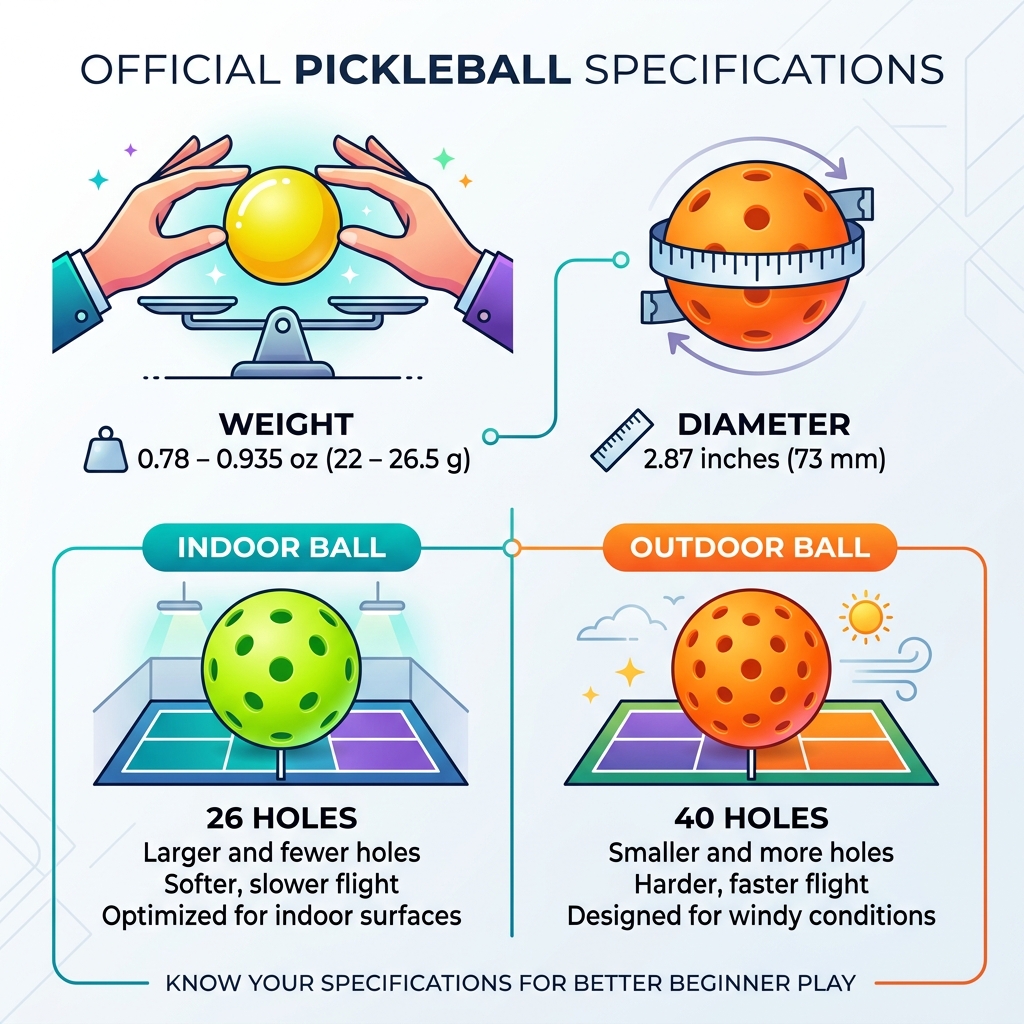
When we first step onto the court, most of us think a ball is just a ball. However, in pickleball, the physical specifications are strictly regulated to ensure fair play. For a ball to be considered “official,” it must weigh between 0.78 and 0.935 ounces (roughly 22 to 26.5 grams). It also needs to have a diameter of exactly 2.87 inches (73mm).
For beginners, these numbers aren’t just trivia; they impact how the ball feels on your paddle. A ball at the heavier end of the spectrum might offer more “pop” and power, while a lighter ball can be easier to control during those tricky kitchen rallies. If you want to dive deeper into the technical side of things, check out our guide on finding the best pickleball balls for beginners.
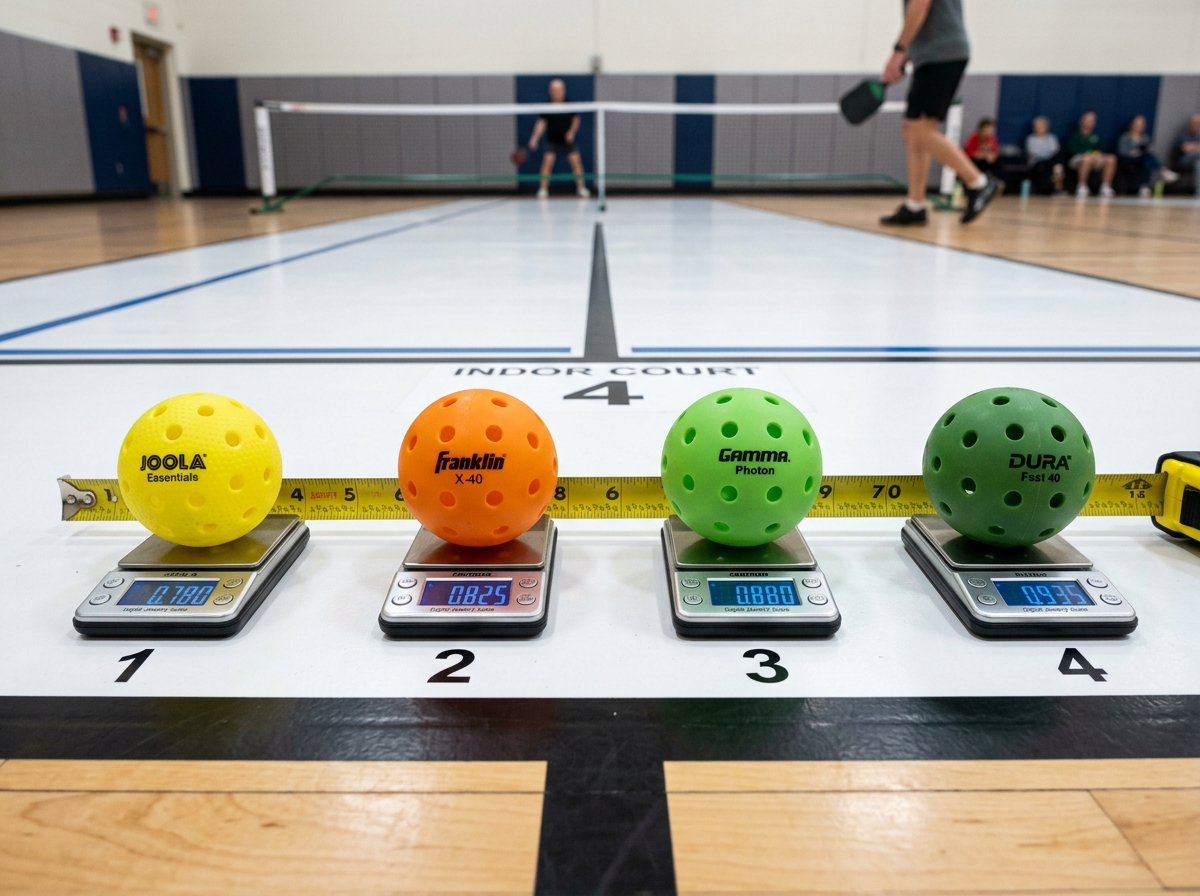
One thing we always tell new players is to pay attention to the material. Beginners should look for balls made of high-quality, slightly softer plastic. Harder balls are often used by professionals because they play faster, but they also crack more easily and can be harder on your arm. A softer ball provides a “plusher” feel, which is much more forgiving when you are still learning the timing of your swings.
Visibility and Color Choices for the Best Pickleballs for Beginners
Have you ever tried to track a dark ball against a dark gym floor? It’s not fun, and it certainly doesn’t help your game. Visibility is one of the most underrated factors when searching for the best pickleballs for beginners.
Expert consensus is clear: neon green is the gold standard. It is the most visible color across various lighting conditions and court surfaces. Most leagues and serious players use neon green or bright optic yellow because these colors provide the highest contrast against the blue or green surfaces of most courts.
If you’re playing in a multi-purpose gym (like a basketball court), you might deal with a lot of distracting lines on the floor. In these cases, a bright neon ball helps your eyes lock onto the target. For those looking to save some money while getting the right colors, we have a great resource on budget-friendly pickleball gear for beginners.
Durability and Bounce: What Makes the Best Pickleballs for Beginners?
Durability is the name of the game for new players. There is nothing more frustrating than getting into a rhythm only to have your ball crack mid-rally. Some balls, like the Franklin X-40, are famous for their longevity, often lasting 20 to 30 full games before showing signs of wear.
Bounce consistency is another crucial factor. As you develop your “touch,” you need to trust that the ball will bounce the same way every time it hits the ground. Some cheaper, off-brand balls can go “out of round” (meaning they lose their perfect spherical shape) after just a few hits. When a ball isn’t round, it bounces unpredictably, which can ruin a beginner’s confidence.
We always recommend that beginners stop-playing-with-bad-balls-and-get-the-best-instead because high-quality balls accelerate the learning curve. If the ball does what it’s supposed to do, you can focus on your footwork and swing rather than compensating for a “dead” or “wobbly” ball.
Indoor vs. Outdoor: Why Beginners Need Specific Balls
One of the most common mistakes we see beginners make is grabbing a pack of balls without checking if they are meant for indoor or outdoor play. While they might look similar at a glance, they are engineered very differently.
| Feature | Indoor Pickleballs | Outdoor Pickleballs |
|---|---|---|
| Hole Count | Typically 26 holes | Typically 40 holes |
| Hole Size | Larger holes | Smaller holes |
| Weight | Generally lighter | Generally heavier |
| Material | Softer plastic | Harder, thicker plastic |
| Manufacturing | Often injection molded | Often rotationally molded |
Indoor balls are designed for smooth surfaces like wood (gym floors) or smooth concrete. Because there is no wind indoors, the holes are larger. This design creates more drag, slowing the ball down and making it easier for beginners to sustain long rallies.
Outdoor balls, on the other hand, have 40 smaller holes to minimize the impact of wind. They are also made of harder plastic to withstand rougher surfaces like asphalt. If you try to play with an outdoor ball on a smooth indoor gym floor, it will skip and slide, making the game feel way too fast. For a dedicated indoor experience, many players prefer the Recruit Pure Indoor Pickleballs | Onix Pickleball , which are specifically engineered to offer a true bounce on indoor surfaces.
Top Recommended Indoor Pickleballs for New Players
When it comes to specific recommendations, a few names consistently rise to the top of the list for beginners.
- Franklin X-40: While often used outdoors, its durability makes it a favorite for beginners everywhere. It offers great value, especially when bought in bulk.
- Selkirk Pro S1: This ball is a game-changer for players worried about cracking. It features an industry-first one-year no-crack warranty. It’s a bit of an investment upfront, but the peace of mind is worth it.
- ONIX Fuse Indoor: These are excellent for creating consistency. They have exceptional seam welding, which helps them resist splitting even during high-intensity play.
- JOOLA Primo: Known for its balanced flight, this ball is often included in high-quality starter sets like the JOOLA Essentials Pickleball Paddles & Balls Set – JOOLA USA .
If you’re looking for a complete package to get started, you might want to look into the best beginner pickleball sets to get you on the court fast. These kits usually pair beginner-friendly balls with paddles that have a large sweet spot, ensuring you have the best possible start.
Buying Guide: How to Avoid Common Beginner Mistakes
We’ve all been there — trying to save a few bucks by buying the cheapest option available. But in pickleball, “cheap” often means “frustrating.” One of the biggest mistakes beginners make is buying “practice balls” that are actually repurposed baseball training balls. These don’t have the right bounce or weight for real pickleball play.
Instead, we recommend buying in bulk from reputable brands. For example, the GoSports GS40 can cost as low as $1.39 per ball when you buy larger multi-packs. This is much more economical than buying 2-packs at a local sporting goods store for $5.00 a ball.
Another tip is to keep an eye on your equipment’s lifespan. Beginners should expect to replace their balls every 20-30 games. Even if the ball hasn’t cracked, it can lose its “pop” and become soft over time. If the ball feels “mushy” when you hit it, it’s time for a fresh one. For more advice on finding value, check out our guide on pickleball starter packs that wont break the bank.
Frequently Asked Questions about Beginner Pickleballs
How often should I replace my pickleballs? As a general rule, replace them every 20-30 games, or sooner if you notice a crack or the ball starts to feel soft. Professional balls like the Franklin X-40 are quite durable, but even they eventually lose their roundness.
Do I need USAPA-approved balls? If you plan on playing in any sanctioned tournaments, yes, you need USAPA-approved balls. For recreational play at your local park or gym, it’s less critical, but using approved balls ensures you are practicing with the same equipment used in official games.
Are starter kits worth it? Absolutely. Sets like the ONIX Pickleball Starter Set: Z1 Paddles and Ball Kit or the Recruit Composite Pickle ball Set provide a balanced entry point. They usually include paddles and balls that are specifically matched to perform well together for new players.
Conclusion
At Voce Economia, we want to make sure your first experience on the court is a positive one. Choosing the best pickleballs for beginners is about more than just picking a color; it’s about finding a ball that offers durability, visibility, and a consistent bounce.
Whether you opt for the long-lasting Franklin X-40, the warranted Selkirk Pro S1, or a budget-friendly bulk pack of GoSports GS40s, the right equipment will help you focus on what really matters: having fun and improving your game.
Ready to round out the rest of your gear? Explore more professional pickleball equipment guides to find the perfect paddle and accessories for your journey. Happy dinking!
