
The Best Balls for Pickleball Beginners (Quick Guide)
The best balls pickleball beginners should look for are soft, consistent, and easy to see on the court. The wrong ball makes learning harder than it needs to be.
Here are the top picks at a glance:
| Ball | Best For | Price Per Ball |
|---|---|---|
| Franklin X-40 | All-around beginner use | ~$2.09-$3.40 |
| GoSports GS40 | Budget practice in bulk | ~$1.39-$2.07 |
| Selkirk Pro S1 | Durability, no-crack warranty | ~$2.50-$3.75 |
| Onix Pure 2 | Consistent flight indoors | ~$2.00-$3.00 |
| Onix Recruit | Casual indoor practice | Budget-friendly |
Starting out in pickleball is exciting. But many beginners hit a wall early — not because of their swing, but because of their ball.
Balls that bounce unevenly, crack after a few games, or are hard to track in the air make it tough to build real skills. And with dozens of options on the market, picking the right one feels overwhelming.
The good news? A beginner-friendly pickleball doesn’t need to be expensive. It just needs to do a few things well: bounce consistently, hold up for several sessions, and be easy to see.
This guide breaks down exactly what to look for and which balls deliver the best value for new players.
Understanding Indoor vs. Outdoor Pickleballs
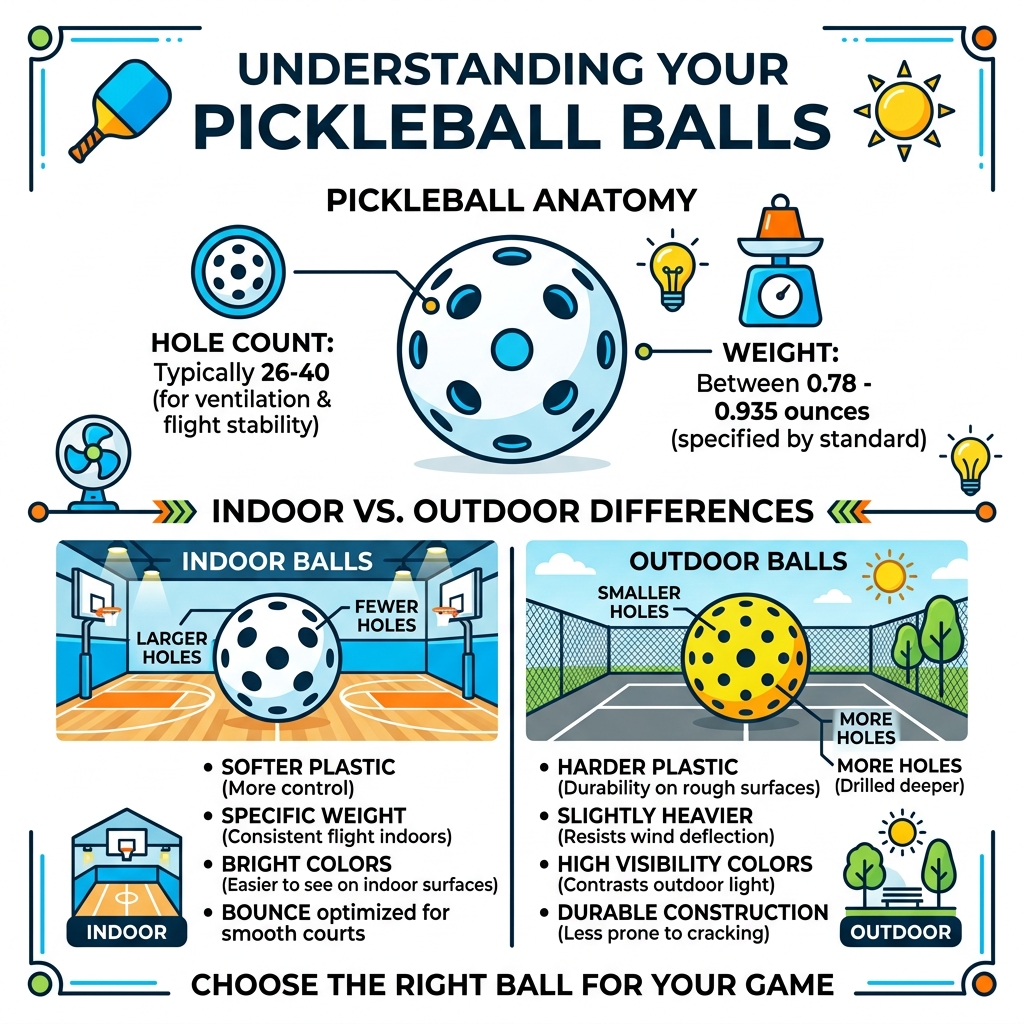
One of the first hurdles we see beginners face is the “Indoor vs. Outdoor” label. It sounds simple—if you’re inside a building, use an indoor ball, right? Well, not exactly. In pickleball, the “type” of ball actually refers more to the surface and the conditions (like wind) than just the roof over your head.
Outdoor pickleballs are designed for rougher surfaces like asphalt or dedicated outdoor courts. They are made of harder plastic to withstand the friction of the ground and are slightly heavier to prevent the wind from taking your shot into the next zip code.
Indoor pickleballs, conversely, are designed for smooth surfaces like gymnasium floors or wooden basketball courts. They are made of softer plastic and have a different hole pattern.
Here is a breakdown of the technical specs you’ll see:
| Feature | Indoor Balls | Outdoor Balls |
|---|---|---|
| Hole Count | 26 Large Holes | 40 Small Holes |
| Weight | ~24 grams (0.8 oz) | ~26 grams (0.9 oz) |
| Material | Softer Plastic | Harder, stiffer plastic |
| Bounce | Higher, softer bounce | Lower, harder bounce |
| Wind Resistance | Low | High |
If you are a beginner, the rule of thumb is this: if you are playing on a rough “tennis-style” surface, go with an outdoor ball. If you are playing in a church gym or a rec center with wood floors, go indoor. Using an outdoor ball on a smooth gym floor is a recipe for “skidding,” where the ball slides instead of bouncing, which can be incredibly frustrating when you’re trying to learn the rhythm of the game.
To see the latest options for both environments, you can Check prices for top-rated balls.
What Makes the Best Balls Pickleball Beginners Need?
When we talk about the best balls pickleball beginners should use, we aren’t just looking for the “pro” choice. Pros often want a “fast” ball that zips through the air. For someone just starting, a fast ball is your enemy. You want a ball that gives you time to react.
The key factors for beginner-friendly balls are:
- Bounce Consistency: Nothing kills a rally faster than a “dead” ball or one that hops sideways for no reason. Beginners need a predictable bounce to build muscle memory.
- Visibility: You can’t hit what you can’t see. Most beginners find neon green or “optic yellow” the easiest to track against various backgrounds.
- Durability: You don’t want to spend your whole budget on balls that crack after three games. Look for “seamless” or “rotational molded” balls, as these tend to last much longer.
- Control: Softer plastics allow the ball to stay on your paddle just a fraction of a second longer, giving you more control over where it goes.
For a deeper dive into these features, check out our guide on finding-the-best-pickleball-balls-for-beginners.
Top 5 Recommended Best Balls Pickleball Beginners Should Buy
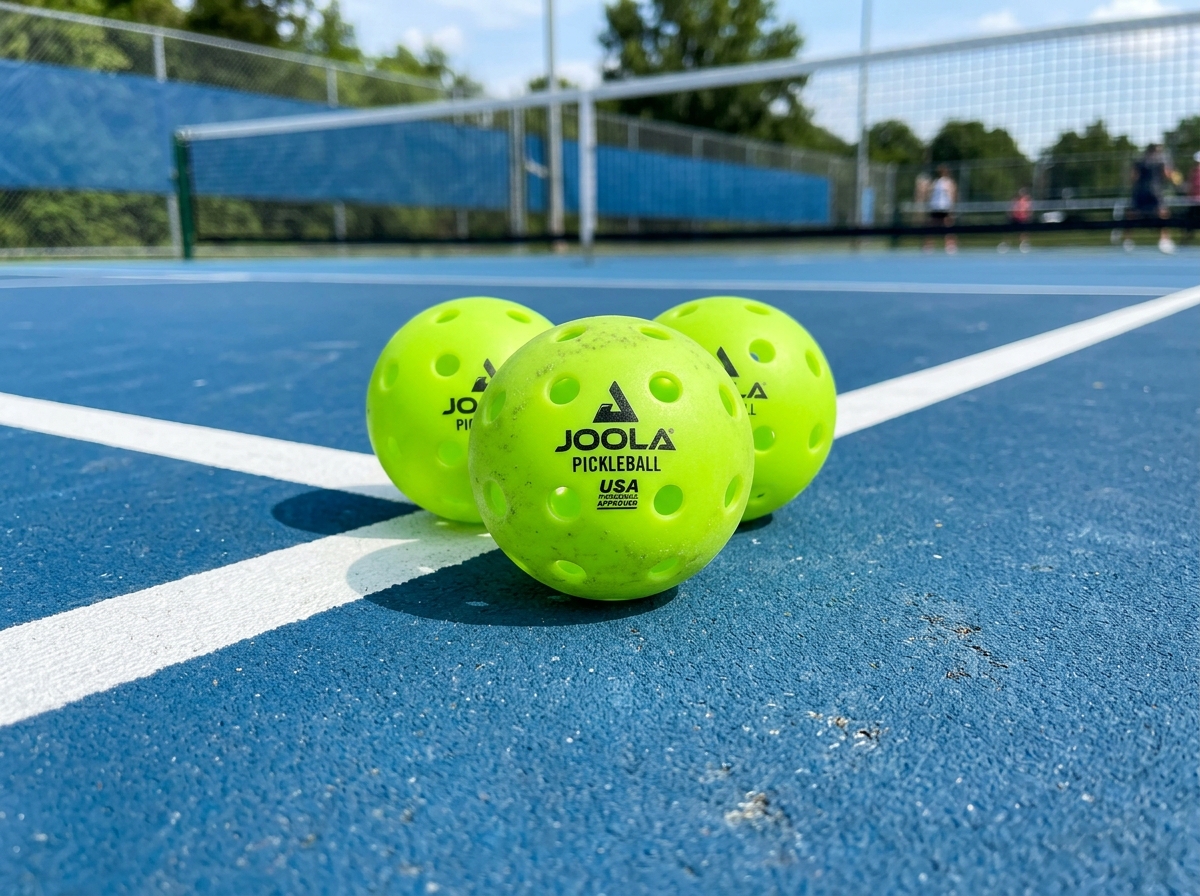
If you’re ready to grab a pack and head to the courts, these are the five we recommend most often for new players:
- Franklin X-40: This is the “Gold Standard.” It is the official tournament ball for many major events, but it’s also fantastic for beginners because it is incredibly durable and has a very consistent bounce. It’s a bit softer than some other pro balls, which makes it easier to control.
- GoSports GS40: If you are looking for the best bang for your buck, this is it. You can often find these in bulk packs for as low as $1.39 per ball. They are great for practice sessions where you might lose a few over the fence.
- Selkirk Pro S1: This ball is a bit of an investment, but it comes with an industry-first one-year no-crack warranty. For a beginner who hits hard or plays in cold weather (where balls crack easily), this durability is a huge plus.
- Onix Pure 2: Known for its “True Flight” technology, this ball is weighted perfectly to fly straight, even if there’s a light breeze. It’s a favorite for those who want a very consistent, predictable experience.
- Onix Recruit: Specifically designed for those learning the game, these are often bundled in starter sets. They focus on being lightweight and easy to hit.
How to Choose the Best Balls Pickleball Beginners Can Use Indoors
Indoor play is a different beast. If you are playing on a hardwood basketball court or a “multi-purpose” gymnasium floor, a standard outdoor ball will feel like a rock. It will bounce too low and skid across the floor.
The best balls pickleball beginners can use indoors are those with 26 larger holes. The larger holes create more drag, slowing the ball down so you have more time to set up your shot. Indoor balls like the Franklin X-26 or the Onix Fuse Indoor are specifically engineered to not skid on smooth surfaces.
Visibility is also key indoors. While yellow is great outside, some gym lights make orange or bright green balls easier to see against wooden walls. For more on selecting the right indoor gear, see our article on finding-the-best-pickleball-balls-for-beginners-2 or browse these Recommended indoor options.
Maximizing Your Gear: Durability and Replacement
Even the best pickleballs aren’t immortal. Because they are made of plastic and hit with force, they eventually lose their “pop” or develop structural issues. For a beginner, an outdoor ball typically lasts about 3–5 games of heavy play, while indoor balls can last 5–10 games (since the surface is smoother and the plastic is softer).
How do you know it’s time to toss a ball in the bin? Look for these signs:
- Cracking: Small hairline fractures usually appear around the holes first. If you see a crack, the ball is done. It will no longer bounce correctly.
- Soft Spots: Sometimes a ball won’t crack, but it will get “mushy.” If you squeeze the ball and it feels like a stress ball rather than a firm plastic shell, replace it.
- Out of Round: If you roll the ball on a flat floor and it wobbles or veers off course, it has gone “out of round.” This happens often with cheaper balls or after very hard hits.
- Faded Color: If the bright neon has turned into a dull yellow, it’s going to be much harder to see, especially during fast rallies.
Pro Tip for Cold Weather: If you’re playing outdoors and the temperature drops below 50°F, plastic becomes brittle. Harder balls like the Onix Dura Fast 40 are notorious for cracking in the cold. In winter, many players switch to the Franklin X-40 because it handles temperature changes better.
Common Pitfalls and Selection Tips
We’ve seen it all when it comes to beginner mistakes. To save you some money and frustration, avoid these common traps:
- Ignoring USAPA Approval: If you ever plan to play in a local league or a small round-robin tournament, you’ll need USAPA-approved balls. Most major brands (Franklin, Onix, Selkirk) are approved, but some “no-name” bulk packs on big retail sites are not.
- Using Indoor Balls Outside: We’ve seen beginners try this to “slow the game down.” Don’t do it. The wind will catch the large holes and move the ball three feet mid-air, and the rough asphalt will shred the soft plastic in minutes.
- Neglecting Bulk Packs: Buying a 3-pack of balls is usually the most expensive way to do it. If you know you’re going to play at least once a week, buy a 12-pack or a 24-pack. The price per ball drops significantly.
- Color Confusion: Don’t just buy your favorite color. Think about the court. If the court is blue, a yellow ball pops beautifully. If you’re playing in a gym with lots of yellow sunlight coming through windows, an orange ball might be better.
Frequently Asked Questions About Beginner Pickleballs
Can I use outdoor balls inside?
Technically, yes, but only on “hard court” indoor surfaces (like a dedicated indoor pickleball facility with tennis-court-style surfacing). If you try to use an outdoor ball on a gymnasium floor, it will be too fast, too heavy, and it will skid. Most modern indoor facilities actually prefer you use outdoor balls because the surfaces are identical to outdoor courts.
How many holes should a beginner ball have?
It depends on where you are!
- Outdoor: 40 small holes. This helps the ball cut through the wind.
- Indoor: 26 large holes. This slows the ball down for better control on smooth surfaces. As a beginner, don’t worry about counting the holes; just check the packaging for the “Indoor” or “Outdoor” label.
Are all pickleballs USAPA approved?
No. To be USAPA (USA Pickleball) approved, a ball must meet strict requirements for weight (0.78-0.935 ounces), diameter (2.87-2.97 inches), and bounce height (30-34 inches when dropped from 78 inches). For casual backyard play, it doesn’t matter, but for any organized play, look for the “USAPA Approved” seal on the ball or box.
Conclusion
Finding the best balls pickleball beginners can rely on doesn’t have to be a chore. If you want the safest bet that will work for almost any situation, grab a pack of Franklin X-40s. They offer the perfect balance of price, durability, and a consistent bounce that will help you find your rhythm on the court.
If you are on a strict budget, the GoSports GS40 is a fantastic alternative that lets you practice your serves and dinks without worrying about the cost of a lost ball. The goal is to keep the ball in play as long as possible so you can learn the game—and having the right ball is the first step toward that goal.
At Voce Economia, we are dedicated to helping you find the best gear to grow your game without emptying your wallet. For more guides on paddles, bags, and court shoes, visit our equipment services section. Happy dinking!
