
Indoor Pickleballs: The Best Balls for Hardwood Courts
Why the Right Indoor Pickleballs Make All the Difference
Indoor pickleballs are specially designed balls built for gym floors, hardwood courts, and other indoor surfaces — and choosing the right one can seriously change how your game feels.
Here are the top indoor pickleballs to consider:
| Ball | Holes | Construction | USA Pickleball Approved |
|---|---|---|---|
| GAMMA Photon | 26 | Two-piece | Yes |
| Onix Fuse Indoor | 26 | Seamless one-piece | Yes |
| Diadem Official Indoor | 26 | Single mold seamless | Yes |
| Jugs Indoor | 26 | Softer plastic | Yes |
| Big Dill Relish | 26 | Welded seam | Yes |
If you’re just starting out, inconsistent bounces and cracked balls are frustrating. Indoor pickleballs solve this — they’re softer, lighter, and have larger holes than outdoor balls. That means better control and a truer bounce on smooth surfaces like hardwood.
They don’t need to fight wind or weather, so the design can focus entirely on predictable flight and feel.
The difference matters more than most beginners expect. Playing with the wrong ball — like an outdoor ball on a gym floor — leads to an unpredictable, fast bounce that’s hard to learn from.
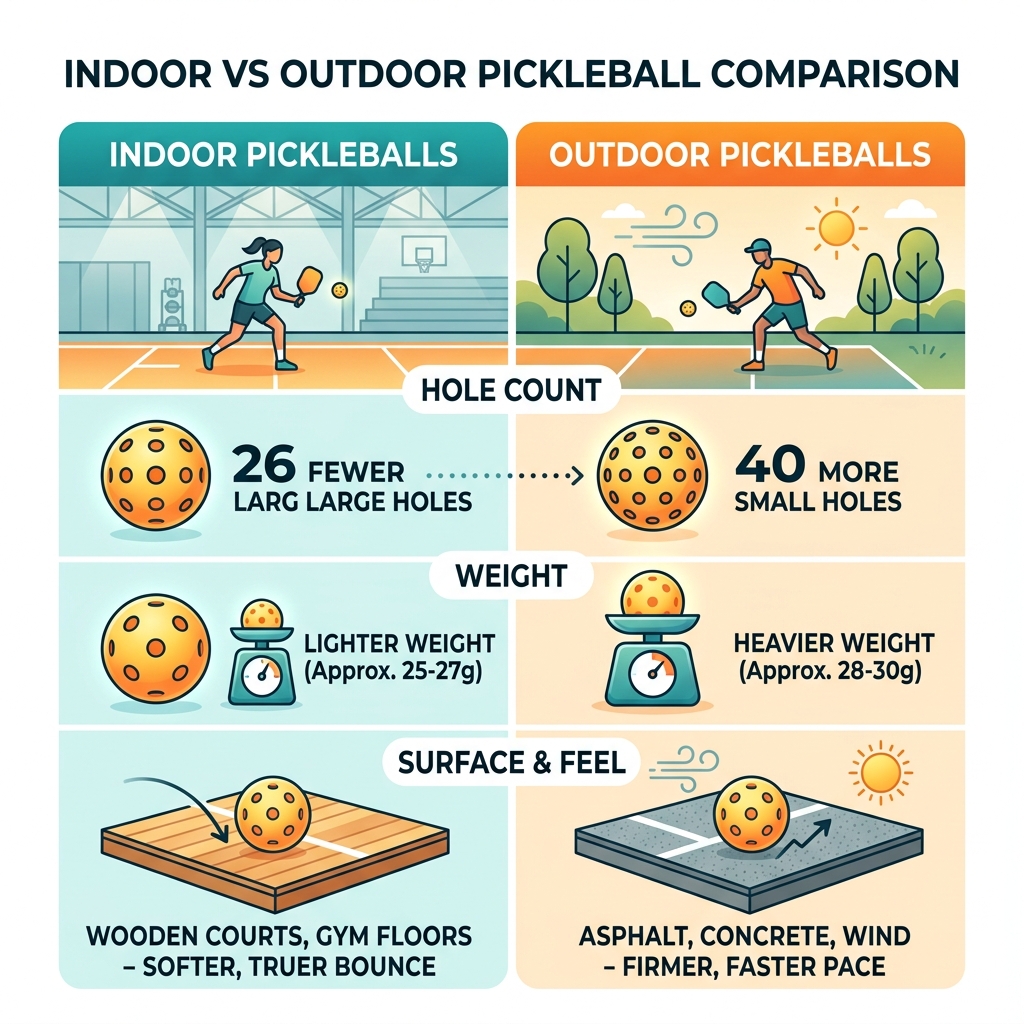
Quick look at indoor pickleballs:
Key Features of High-Quality Indoor Pickleballs
When we head inside to the local gymnasium or recreation center, we aren’t just escaping the wind and rain; we are entering a completely different playing environment. High-quality indoor pickleballs are engineered specifically for these conditions. Unlike their outdoor cousins, which are built to withstand asphalt and high winds, indoor balls prioritize touch, control, and a consistent bounce on slicker surfaces.
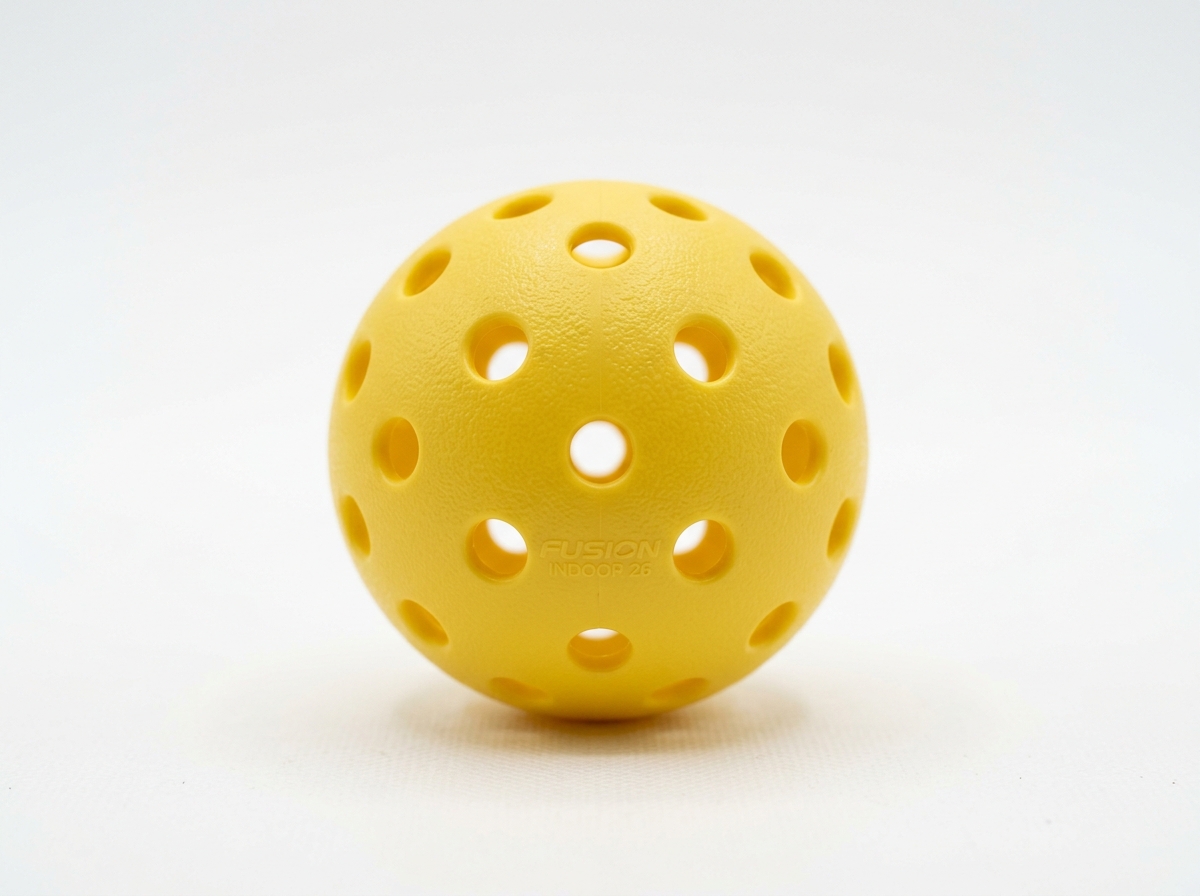
The Magic Number: 26 Holes
If you look closely at the ball in your hand, you’ll notice the hole pattern is quite distinct. Most indoor pickleballs feature exactly 26 precision-molded holes. Because there is no wind to worry about indoors, these holes are significantly larger than the 40 tiny holes found on outdoor balls. These larger holes allow for a stable, accurate flight path through the still air of an indoor court.
Material and Construction
The materials used in indoor pickleballs are generally softer and more pliable. This “softness” serves a vital purpose: it helps the ball grip the smooth hardwood or tile surface upon impact, preventing it from skidding.
We often see two types of construction:
- Two-Piece Construction: Brands like GAMMA use an ultra-balanced two-piece design. This method ensures the ball stays round and maintains a true bounce throughout its life.
- Single Mold/Seamless Design: Higher-end models, such as those from Diadem or Onix, often feature a seamless construction. By eliminating the seam, these balls are less likely to split or crack during intense rallies.
For those just starting their journey, understanding these technical details is the first step toward finding the best pickleball balls for beginners. Welded seams and precision molding aren’t just marketing buzzwords; they are the features that keep your ball from wobbling mid-air.
Top-Rated Models for Every Player
Choosing the right ball depends on your skill level and how much “pop” you want in your game. We’ve rounded up the industry leaders to help you decide which indoor pickleballs deserve a spot in your bag.
GAMMA Photon
The GAMMA Photon is a powerhouse in the indoor world. With a 4.5-star rating from hundreds of players, it is celebrated for its high-visibility optic green color and “ultra-balanced” construction. It is designed to withstand the rigors of frequent play without losing its shape, making it a reliable choice for both casual weekenders and tournament regulars.
Onix Fuse Indoor
The Onix Fuse is often the “gold standard” for many clubs. It is designed to be ready to play right out of the box, requiring no “break-in” period. Its seamless construction and authentic bounce make it a favorite for those who want their indoor game to feel as professional as possible.
Diadem Official Indoor
If consistency is your main concern, the Diadem Official ball is a top contender. It uses a single-mold process that creates a perfectly round sphere. Many players find that it maintains its shape longer than cheaper alternatives, and its bright orange hue is incredibly easy to track against dark gym walls.
Jugs Indoor
Jugs balls are legendary for being soft and lightweight. They are particularly popular with senior groups and beginners because they play a bit slower, allowing for longer rallies and more time to react. You can find more scientific research on Jugs Indoor Pickleball Balls which highlights their 5.0-star satisfaction rate among players who prefer a “not too hard, not too soft” feel.
Big Dill Relish
For those who like a bit of personality with their gear, the Big Dill Relish balls offer a fun name backed by serious performance. These balls feature 26 precisely measured holes and a darker optic green color that provides excellent contrast on light-colored hardwood.
Comparison Table of Top Models
| Brand | Model | Hole Count | Construction Type | USAPA Approved |
|---|---|---|---|---|
| GAMMA | Photon | 26 | Two-Piece | Yes |
| Onix | Fuse | 26 | Seamless | Yes |
| Diadem | Official | 26 | Single Mold | Yes |
| Prolite | Jugs | 26 | Soft Plastic | Yes |
| Big Dill | Relish | 26 | Welded Seam | Yes |
Best Colors for Visibility with Indoor Pickleballs
Visibility is a common struggle when playing indoors. Between the bright overhead lights, the lines of a basketball court, and the beige or brown of a hardwood floor, the ball can easily get lost.
We recommend choosing colors based on your specific venue:
- Optic Green: The most popular choice, providing a sharp contrast against most dark gym floors.
- Bright Orange: Excellent for venues with lighter wood floors or white walls.
- Venue-Specific Contrast: Some clubs even use blue or red balls to ensure maximum tracking.
Picking the right color is just as important as the ball’s bounce. You can find more info about choosing the best balls to ensure you never lose sight of a smash again.
Choosing Indoor Pickleballs for Tournament Play
If you plan on entering a sanctioned tournament, you cannot just grab any ball from the bin. You must use a ball that is USA Pickleball (USAPA) approved.
Tournament-grade indoor pickleballs must meet strict standards for weight, bounce height, and flight stability. For example, The Official Pickleball Indoor Pickleball is specifically tested to maintain its roundness even in cooler gym temperatures, ensuring that every player has a fair, consistent experience.
Comparing Price Points and Bulk Buying Options
Pickleballs are “consumables”—they will eventually wear out, lose their bounce, or crack. Because of this, we always suggest looking at bulk options to save money in the long run.
Pricing Tiers
- 3-Pack or 6-Pack: Great for individuals who play once a week. Prices usually range from $9 to $16.
- Dozen (12-Pack): The “sweet spot” for regular players. You can often find these for around $25 to $30.
- Bulk (50 to 100-Pack): Ideal for clubs, schools, or groups of friends. Buying a 100-pack of Jugs or Onix balls can drop the price per ball significantly, sometimes as low as $2.00 per ball.
How to Save Even More
Many retailers offer ways to keep costs down:
- Subscribe and Save: Some brands offer a 10% discount if you set up a monthly or quarterly delivery.
- Professional Discounts: Diadem and other major brands often provide discounts for military, first responders, medical workers, and teachers.
- Free Shipping: Look for retailers that offer free shipping on orders over a certain amount (often $69 to $125).
Performance on Different Indoor Court Surfaces
While we often talk about “hardwood,” indoor play actually happens on a variety of surfaces. Each surface interacts with indoor pickleballs differently.
Hardwood Gym Floors
This is the most common indoor surface. Because hardwood is finished with a slick coating, you need a softer ball that can “grab” the floor. A ball that is too hard will skid, making it difficult to play a “dink” game.
Tile and Cement Courts
Some community centers use multi-purpose tile or smoothed cement. These surfaces are harder than wood and can be tougher on your equipment. In these environments, durability is key. We recommend seamless balls like the Onix Fuse to prevent premature cracking on these unforgiving floors.
Cushioned Surfaces
High-end dedicated indoor facilities often use cushioned acrylic surfaces. These are the “luxury” of pickleball courts. They offer the most consistent bounce and are the easiest on your joints. Most USAPA-approved indoor pickleballs will perform beautifully here.
Environmental Factors
One of the biggest perks of playing indoors is climate control. Without wind, your ball will always fly straight. However, acoustics can be an issue. If you are playing in a neighborhood with strict noise rules, some players opt for foam balls for practice, though these are not used in standard games. For more on the basics of what to look for, check out our more info about beginner pickleball gear.
Frequently Asked Questions about Indoor Pickleballs
What is the difference between indoor and outdoor pickleballs?
The primary differences are the hole count and the weight. Outdoor balls have 40 small holes to help them cut through wind and are made of a harder plastic to survive rough asphalt. Indoor pickleballs have 26 larger holes and are made of a softer plastic to provide better control on smooth gym floors.
Why do indoor pickleballs have 26 holes?
The 26-hole design is optimized for flight in a windless environment. Because there is no breeze to knock the ball off course, larger holes can be used to create a stable flight path and a consistent bounce height that meets tournament regulations.
How long do indoor pickleballs typically last?
Because they are played on smooth surfaces, indoor pickleballs generally last longer than outdoor balls. While an outdoor ball might crack in a few games, a high-quality indoor ball can last for several weeks of regular play. However, they will eventually “soften” or lose their bounce, at which point they should be replaced.
Conclusion
At Voce Economia, we believe that having the right gear is the best way to fall in love with the sport. Whether you are choosing the soft, beginner-friendly bounce of a Jugs ball or the tournament-ready precision of a GAMMA Photon, selecting the right indoor pickleballs will help you play better and have more fun.
If you are just starting out, don’t feel pressured to buy the most expensive option immediately. Start with a reliable 6-pack, see how the color works in your local gym, and go from there. For more tips on paddles, bags, and shoes, explore our more info about pickleball equipment. Happy dinking!
