Graphite vs. Composite Pickleball Paddle Types: What’s the Real Difference?
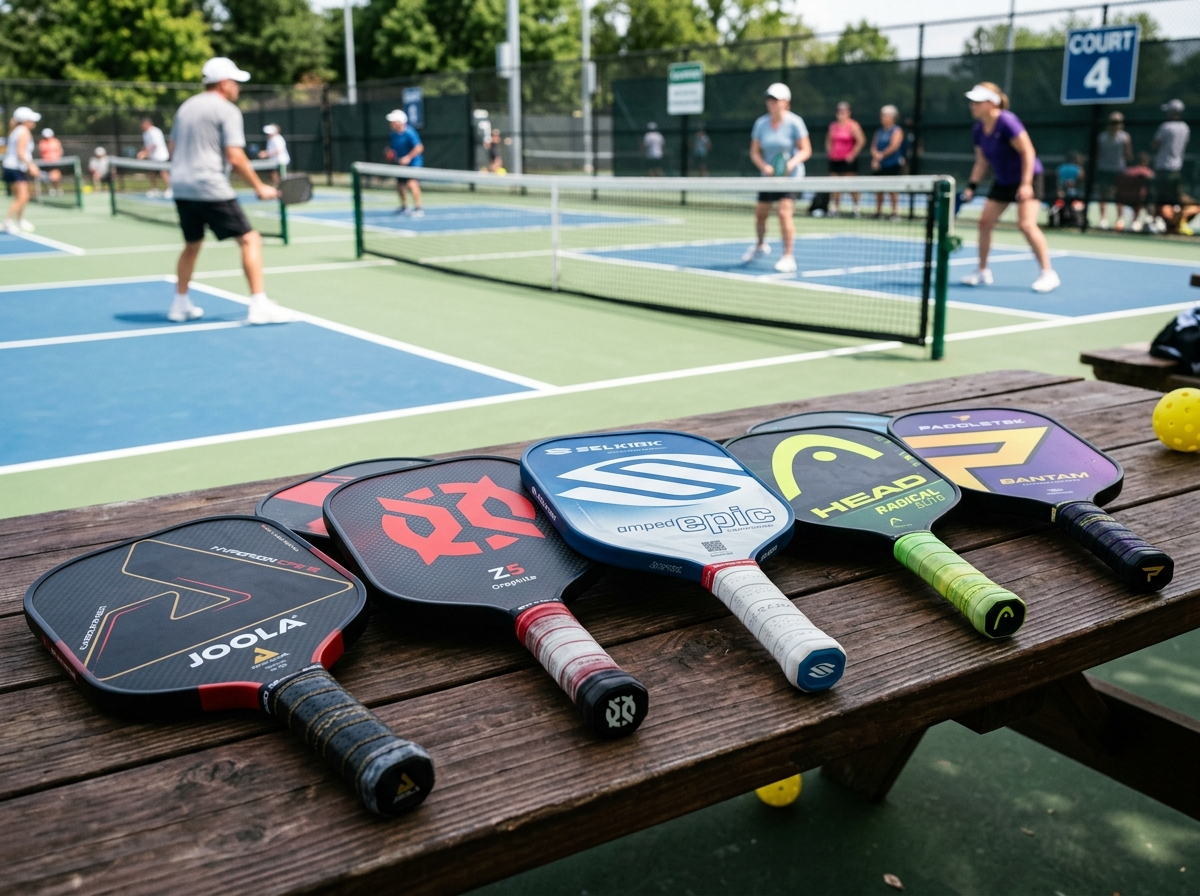
Pickleball paddle types fall into a few clear categories based on face material, core, and shape. Here’s a quick breakdown to answer the most common question right away:
| Paddle Type | Face Material | Best For | Price Range |
|---|---|---|---|
| Graphite | Graphite face | Touch, control, finesse | $70-$200+ |
| Composite/Fiberglass | Fiberglass face | Power, spin, all-court | $50-$200+ |
| Carbon Fiber | Raw carbon face | Spin, advanced control | $100-$250+ |
| Wood | Wood face | Beginners, casual play | $30-$70 |
| Elongated | Any material | Reach, singles play | $70-$200+ |
| Widebody | Any material | Forgiveness, doubles | $50-$200+ |
Walk into any sporting goods store — or scroll through Amazon for five minutes — and you’ll quickly realize the pickleball paddle market is overwhelming. Hundreds of options. Dozens of brands. Every one of them claiming the “perfect blend of power and control.”
So what actually separates a graphite paddle from a composite one? And does the material really change how you play?
The short answer: yes, it does. The face material, core, shape, and thickness all work together to determine whether a paddle helps your dinks land softly in the kitchen or drives the ball past your opponent at the baseline.
This guide cuts through the marketing noise. Whether you’re picking up your first paddle or upgrading from a basic wood one, you’ll learn exactly what the specs mean — and which type fits your game.
Understanding the Core: How Materials Define Pickleball Paddle Types
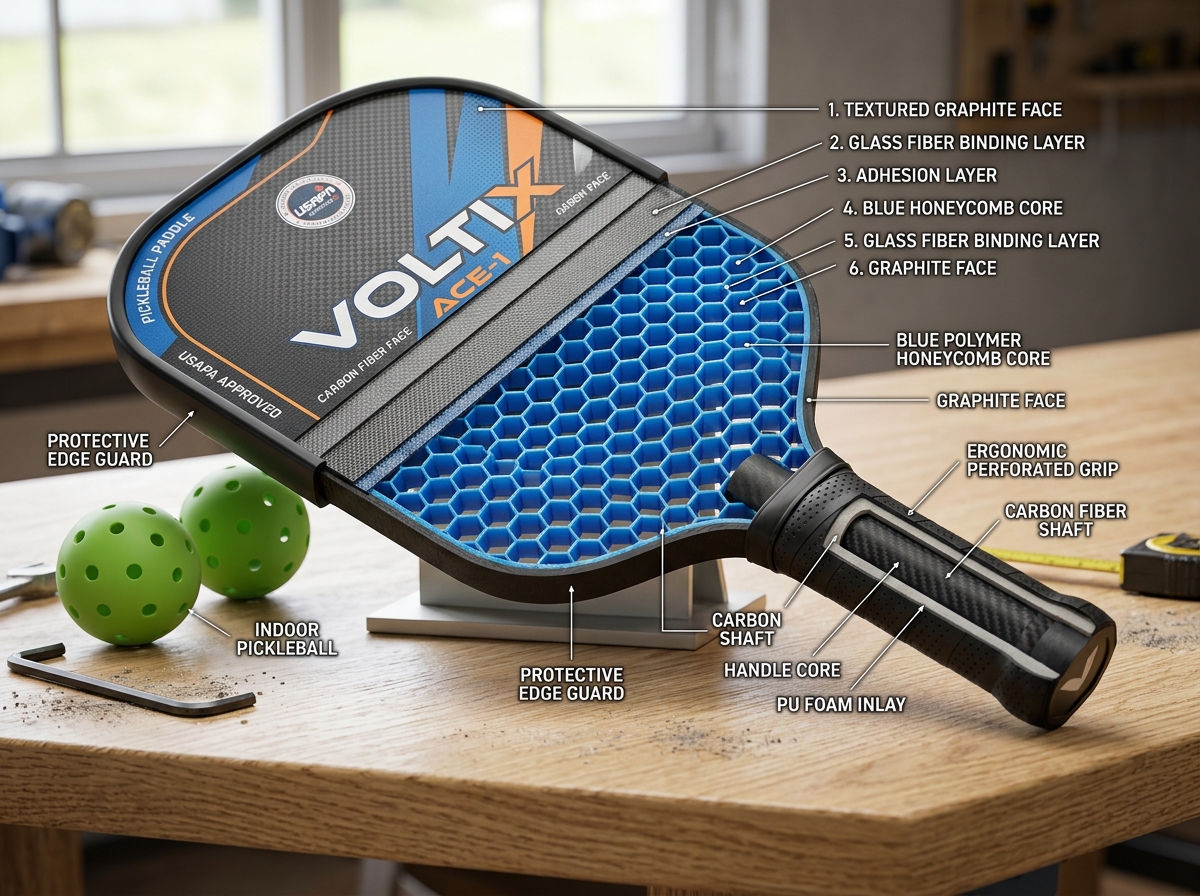
When we talk about pickleball paddle types, we are really talking about the “sandwich” of materials that make up the paddle. At the center is the core, and wrapped around it is the face (or skin). While they might all look similar from a distance, the internal chemistry determines if your paddle feels like a trampoline or a brick.
For those just starting, decoding pickleball paddle materials for beginners is the first step toward making a smart purchase. Historically, paddles were made of wood. While wood is affordable and durable, it’s also heavy—often weighing between 9 and 14 ounces—and lacks the sophisticated “pop” of modern materials.
Today, most players move quickly from wood to high-tech options like graphite, carbon fiber, or fiberglass. If you’re still weighing the pros and cons of the old-school approach, check out the great debate of wood vs fiberglass paddles to see why most modern players have made the switch.
Graphite vs. Composite Face Performance
The “face” is the surface that actually touches the ball.
- Graphite Faces: These are incredibly thin (often the thickness of a few sheets of paper) but very strong. Graphite is known for “touch” and “finesse.” Because it is stiff, it doesn’t flex much, allowing you to feel the ball’s impact better. This is the gold standard for dinking and placement.
- Composite (Fiberglass) Faces: Composite paddles usually feature a fiberglass face. Fiberglass is more flexible than graphite, creating a “trampoline effect.” When the ball hits, the face flexes and then snaps back, providing more power. If you find yourself struggling to get the ball to the baseline, a composite paddle might be your best friend.
- Carbon Fiber Faces: A subset of graphite, raw carbon fiber is the current “it” material. It offers a unique blend of durability and a naturally textured surface that creates massive spin.
Core Materials: Polymer, Nomex, and Aluminum
While the face gets all the glory, the core does the heavy lifting. Most pickleball paddle types today use a honeycomb structure.
- Polymer (Polypropylene): This is the most popular core on the market. It’s a plastic blend that is relatively soft and quiet. It’s excellent for vibration dampening, making it the top choice for players with “pickleball elbow.”
- Nomex: This is a paper-based material coated in resin. It’s very hard and very loud. It provides a huge amount of “pop” and power, but it’s harder to control. Think of it as the “banger’s” choice.
- Aluminum: Rare today, aluminum cores offer great control but can be prone to denting over time.
The size of the honeycomb cells also matters. A 10mm cell (larger) generally offers more power and rebound, while a 6mm cell (smaller) provides a denser feel for better control.
Technical Specs: Thickness, Weight, and Construction Methods
Once you’ve picked your materials, you need to look at the “build.” Two paddles made of the same carbon fiber can play completely differently if one is 13mm thick and the other is 16mm.
14mm vs 16mm: Choosing Your Power Level
Paddle thickness usually ranges from 10mm to 20mm, with 14mm and 16mm being the industry standards.
- Thinner Paddles (13mm-14mm): These are built for power. Less material means the ball “pops” off the surface faster. They are also more maneuverable in fast hand battles at the kitchen.
- Thicker Paddles (16mm-20mm): These are built for control. A thicker core absorbs more energy from the ball, which actually makes it easier to “reset” a hard drive into a soft dink. This creates a larger “reset window,” giving you more forgiveness on defensive shots.
Weight Classes: From Lightweight to Heavyweight
Weight is perhaps the most personal spec. Most players find their “sweet spot” between 7.5 and 8.5 ounces.
- Lightweight (<7.4 oz): Great for maneuverability and quick hands. However, you have to swing harder to generate power, which can lead to stopping the sting with the right pickleball paddle weight if you aren’t careful.
- Midweight (7.4 – 8.2 oz): The “Goldilocks” zone. Most pickleball paddle types fall here because it offers a balance of power and speed.
- Heavyweight (>8.2 oz): These paddles provide effortless power. You don’t have to swing as hard because the mass of the paddle does the work for you. The downside? They can be slower at the net and lead to arm fatigue.
If you are curious about the technical conversion of these weights, we’ve got you covered on how much your paddle weighs in grams and kilograms.
Shape and Geometry: Impact on Reach and Sweet Spot
The USA Pickleball (USAP) has strict rules: the combined length and width of a paddle cannot exceed 24 inches, and the length cannot exceed 17 inches. Within those rules, manufacturers get creative.
Standard, Elongated, and Widebody Pickleball Paddle Types
- Standard (16″ x 8″): This is the most common shape. It offers a large, square sweet spot and is very forgiving. It’s the “all-court” choice for most doubles players.
- Elongated (16.5″ x 7.5″): These are longer and narrower. They offer extra reach (great for singles) and more leverage for power and spin. However, the sweet spot is often higher up the face and narrower, making it less forgiving for beginners.
- Widebody: These maximize the width (often up to 8.5 inches) to create the largest possible sweet spot. If you find yourself hitting the edge guard often, this is the shape for you.
- Hybrid: A middle ground, usually around 16.25″ long, balancing the reach of an elongated paddle with the forgiveness of a standard one.
Handle Length and Grip Size for Better Control
Don’t ignore the handle! Handle lengths range from 4 inches to 6.25 inches.
- Longer Handles (5.25″+): These are essential if you play with a two-handed backhand. They also provide more “whip” for spin.
- Shorter Handles: These allow for more surface area on the paddle face, increasing the sweet spot.
Grip size is equally vital. A grip that is too small can cause hand cramps, while one that is too large prevents you from using your wrist effectively. For our more experienced players, understanding pickleball paddle grip size for seniors is a great resource for finding a comfortable fit that protects your joints.
Performance Features: Spin, Edges, and Construction Generations
The technology in pickleball paddle types has moved fast. We are now seeing “Gen 3” and “Gen 4” paddles that use aerospace engineering techniques.
Textured Surfaces and Raw Carbon Fiber for Spin
Spin is the “secret sauce” of advanced play. To generate it, you need friction.
- Raw Carbon Fiber (T700): This material has a natural microscopic “tooth” that grabs the ball.
- Spray-on Grit: Some paddles use a sand-paper-like coating. This provides massive spin initially but can wear off after a few months of heavy play.
- Carbon Flex Fiber: A newer weave that allows the ball to “dwell” on the face longer, allowing the player to “paint” the ball with spin.
Edge Guard vs. Edgeless Pickleball Paddle Types
- Edge Guard: Most paddles have a plastic rim to protect the core from ground scrapes. Modern “Gen 2” paddles often inject foam behind this edge guard to increase stability (twistweight) and enlarge the sweet spot.
- Edgeless: These paddles look sleek and have less air resistance. However, they are more prone to chipping if you scrape the court. They often feel “faster” through the air but can have a smaller sweet spot unless they use advanced internal weighting.
If you struggle with “dead” spots or vibrations, look for anti-vibration pickleball paddle picks that use foam-injection technology to smooth out the feel of the ball.
Buyer’s Guide: Matching Paddles to Skill Level and Play Style
So, which of these pickleball paddle types should you actually buy?
Play Style Alignment: Doubles vs. Singles
- For the “Dinkers” (Control Players): Look for a 16mm thick paddle with a graphite or carbon fiber face. A standard or widebody shape will give you the consistency you need at the kitchen line.
- For the “Bangers” (Power Players): Look for a 14mm thick paddle with a fiberglass composite face. An elongated shape will give you the leverage to drive the ball hard.
- For Beginners: Don’t overthink it. Start with a midweight (7.8–8.2 oz) paddle with a standard shape. We’ve reviewed several top-rated beginner pickleball paddles that offer the best bang for your buck.
How to Test and Avoid Common Selection Mistakes
One of the biggest mistakes is buying a paddle because a “pro” uses it. Pros have the hand speed to handle heavy, elongated paddles that might be too difficult for a recreational player.
The Play-Test Protocol: If you can demo a paddle, try this:
- Dink 20 balls: Does it feel “soft” or does the ball fly off too fast?
- 5 Third-Shot Drops: Can you easily get the ball into the kitchen from the baseline?
- 5 Hard Drives: Does the paddle vibrate uncomfortably when you swing hard?
Also, check the warranty! High-end paddles ($200+) should offer at least a 6-month to 1-year warranty. Budget paddles often only offer 90 days. For those looking for their very first upgrade, how to pick your first paddle without breaking a hip offers a humorous but practical look at avoiding the “marketing trap.”
Frequently Asked Questions about Pickleball Paddles
What is the best paddle material for a beginner?
For most beginners, a composite (fiberglass) face with a polymer core is the best starting point. It provides enough power to help you get the ball over the net while remaining forgiving enough to learn the “soft” game.
How long does a high-quality paddle typically last?
It depends on how often you play.
- Competitive players (4-5 days/week): 6 to 12 months.
- Casual players (1-2 days/week): 18 months to 2 years. The core eventually “breaks down” and loses its spring, and the face loses its grit/texture.
Does a thicker core always mean more control?
Generally, yes. A 16mm or 20mm core absorbs more impact energy, which keeps the ball from “launching” off the face. This makes it much easier to control the depth of your shots, though you will have to swing harder to generate your own power.
Conclusion
Finding the right pickleball paddle types for your game is a journey, not a one-time decision. As your skills evolve—perhaps moving from a “banger” to a strategic “dinker”—your gear needs will change too.
At Voce Economia, we believe that the best paddle is the one that makes you feel confident on the court. Whether you choose the surgical precision of graphite or the raw power of composite, understanding the “why” behind the specs is the best way to level up your game.
Ready to make your first big purchase? Dive into the ultimate guide to buying your first pickleball paddle to ensure you’re getting the best value for your money. See you on the court!
