
How to Build Better Rallies One Shot at a Time
Why Easy Pickleball Rally Building Is the Fastest Way to Improve Your Game
Easy pickleball rally building starts with a few simple habits: use soft, controlled shots, move to the kitchen line under control, and keep the ball in play longer than your opponent expects.
Here’s a quick-start breakdown:
- Serve and return deep – Push your opponent back and buy yourself time.
- Move to the kitchen line – This is where most points are won.
- Use soft dinks – Short, gentle shots that land in the opponent’s kitchen slow the game down and prevent easy attacks.
- Reset when under pressure – A high, soft shot clears the net and buys you time to recover.
- Stay consistent – Winning ugly beats swinging for winners every time.
Pickleball is now the fastest-growing sport in the United States, with nearly 36.5 million regular participants according to USA Pickleball. It’s easy to see why – rallies can start within your very first session.
But here’s what most beginners don’t realize: a rally isn’t just a back-and-forth. It’s a chance to build confidence, read your opponent, and take control of the point. Those flashy putaway shots you see in pro matches? They only happen because of smart, consistent groundwork first.
The good news is you don’t need to be athletic or experienced to build longer rallies. You just need the right habits and a little repetition.
The Fundamentals of Easy Pickleball Rally Building
When we talk about a “rally,” we are describing the sequence of shots back and forth between players until a fault occurs. To achieve easy pickleball rally building, we must move away from the “bang-bang” style of play where everyone tries to hit the ball as hard as possible. Instead, we focus on three foundational pillars: the dink, the third-shot drop, and the reset.
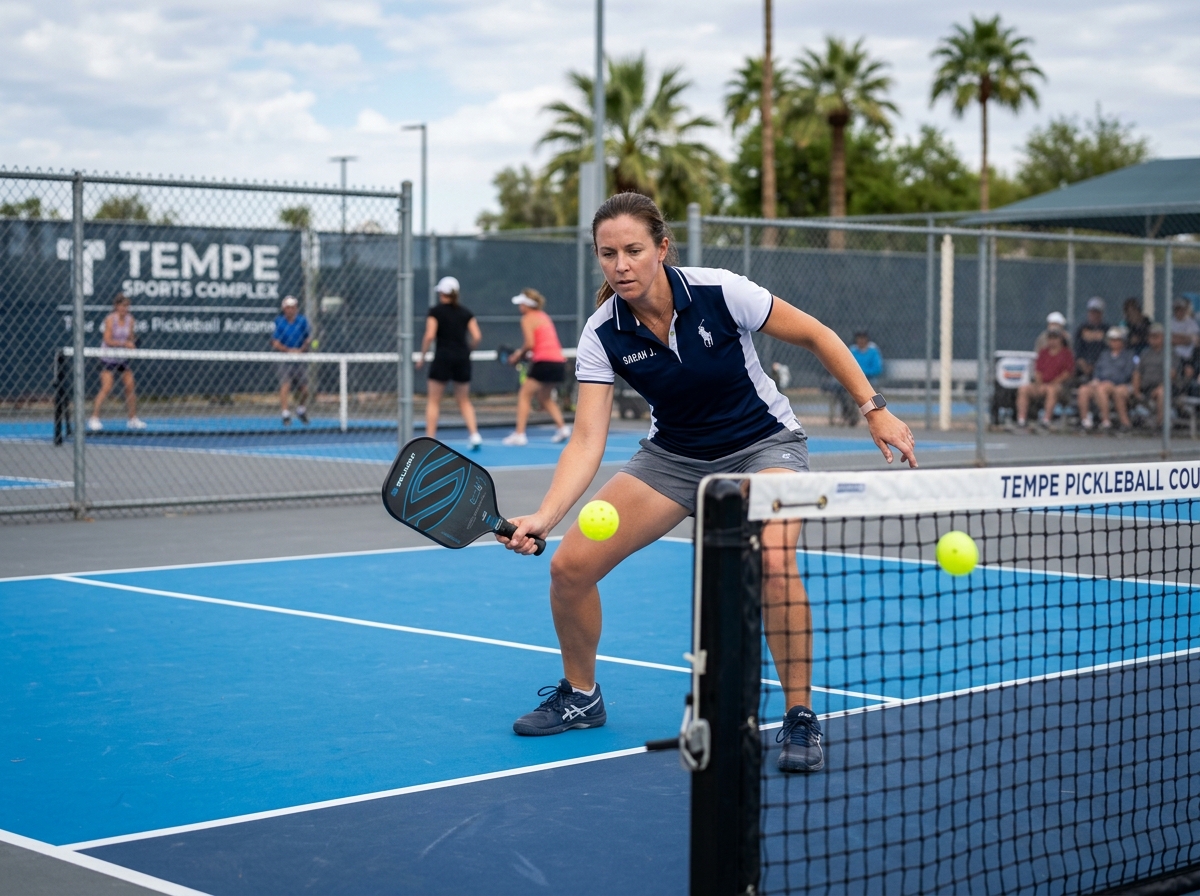
The dink is a soft shot hit from the Non-Volley Zone (NVZ), or “kitchen,” that lands in the opponent’s kitchen. Its purpose is to force the opponent to hit the ball upward, preventing them from smashing it at your feet. The third-shot drop is a similar soft shot hit from the baseline that allows the serving team to safely transition to the net. Finally, the reset is a defensive “block” that takes the pace off a fast ball, dropping it into the kitchen to neutralize an attack.
At Voce Economia, we often tell our readers to “win ugly.” This doesn’t mean playing poorly; it means prioritizing Beginner Tips like consistency over flashy power. If you can keep the ball in play for 10 shots while your opponent can only manage 9, you win. It’s that simple. By focusing on placement and depth rather than speed, you reduce your own errors and wait for the opponent to make theirs.
Why Consistency is Key to Easy Pickleball Rally Building
There is actually a scientific reason why “practice makes perfect” in pickleball. When we perform repetitive drills, our brains undergo a process called myelin thickening. Myelin is the insulation around our nerve fibers (axons). The more we repeat a specific motion—like a cross-court dink—the thicker that myelin sheath becomes, which speeds up the neural signals.
This makes the execution of the shot automatic, much like driving a car or tying your shoes. When you don’t have to “think” about how to hold your paddle, you can spend your mental energy reading your opponent’s body language. This neural speed improvement is the “secret sauce” that separates a frustrated beginner from a confident rally builder.
Mastering the Soft Game: Dinks, Resets, and Positioning
The “soft game” is where the most effective easy pickleball rally building happens. To master this, we start with the “Ready Position.” You should stand with your knees slightly bent, weight on the balls of your feet, and your paddle held out in front of your chest—roughly 18 inches away—at a 10 or 11 o’clock position.
We recommend using the Continental grip (often called the “hammer grip”) for the soft game. It provides the most versatility, allowing you to hit both forehands and backhands without changing your hand position. When dinking, keep your paddle face slightly open and use a compact, “pushing” motion from the shoulder rather than a flick of the wrist.
To keep rallies alive, consider these dinking strategies:
- Directional Dinks: Don’t just hit it back to where it came from. Move your opponents left, right, and deep within the kitchen to keep them off-balance.
- Middle Dinks: Aiming for the “T” where the center line meets the kitchen line often causes confusion between partners in doubles play.
- High Resets: If an opponent speeds the ball up at you, don’t try to hit it back hard. Open your paddle face and let the ball hit the strings, arching it high over the net. As the pros often say, you’re better off going too high than hitting the net. A high ball gives you time to regroup; a ball in the net ends the rally instantly.
Strategic Court Positioning for Success
Your position on the court is just as important as your shot selection. We always emphasize the “Split Step”—a small, neutral hop you take just as your opponent is about to strike the ball. This lands you in a balanced stance, ready to move in any direction.
Effective easy pickleball rally building requires you and your partner to move like they are attached by a string. If your partner moves left to chase a ball, you should shift left to cover the middle. Communication is vital; calling “Mine!” or “Yours!” early prevents “mid-court “divorces” where the ball flies right between two silent players.
Safety is also a part of positioning. According to a study published in the Journal of the American Academy of Orthopaedic Surgeons, pickleball-related injuries are rising alongside the sport’s popularity. To stay in the game, visit our Health section to learn about proper warm-ups. A light jog, arm circles, and “Y, T, W” shoulder stretches can prevent the overuse injuries common in the “pickleball arm.”
Essential Drills to Sustain Longer Rallies
To get better at easy pickleball rally building, you need structured practice. We suggest a “Beginner Bootcamp” approach: minimum movement, minimum rules, and maximum repetitions.
One of the best ways to improve is through shadow swings. This involves mimicking the motion of a dink or volley without a ball. It sounds silly, but it builds the muscle memory needed for proper form and footwork without the distraction of a moving target.
| Drill Type | Focus Area | Best For |
|---|---|---|
| Wall Rallies | Hand-eye coordination | Solo practice, reflex speed |
| Cross-Court Dinking | Angle control | Partner practice, kitchen endurance |
| Figure-8 Footwork | Agility | Staying balanced during movement |
| Serve-to-Target | Accuracy | Consistency in starting points |
For partner play, try “Cooperative Dinking.” Instead of trying to “win” the point, see if you and your partner can hit 20 or 30 dinks in a row without a mistake. This teaches you to “feed” your partner manageable balls, which is the heart of rally building.
Solo Drills for Easy Pickleball Rally Building
You don’t always need a partner to improve. Wall rallies are a superpower for beginners. Stand about 5 to 7 feet from a wall and try to keep a rally going against the bricks. Aim for a specific spot above an imaginary net line. If you can hit 50 consecutive volleys against a wall, your “fast hands” at the kitchen line will improve dramatically.
Another great solo exercise is paddle taps. Simply bounce the ball on your paddle face repeatedly while standing still, then while walking. This builds “touch”—the ability to feel how much force is needed to move the ball. For serve accuracy, place cones or even empty water bottles in the back corners of the service box and practice hitting them. A deep serve is your best friend because it keeps the opponent back and buys you time to reach the kitchen.
Avoiding Common Beginner Mistakes
Even the most enthusiastic players can fall into “traps” that end rallies prematurely. One of the biggest mistakes is the “Death Grip.” If you squeeze your paddle too hard, your wrist becomes stiff, and you lose all “touch” for soft shots. Think of holding the paddle like a firm handshake, not a hammer.
Other common errors include:
- Swinging While Moving: Your body cannot aim accurately if it is in motion. The rule is: Stop -> Hit -> Move. Plant your feet before you make contact.
- Rushing the Net on the Wrong Ball: You must “earn” the kitchen line. Only move forward behind a deep return or a successful third-shot drop. If you run forward while your opponent has an easy “high” ball, they will hit it at your feet before you’re ready.
- Attacking “Red” Balls: In our Equipment guides, we often discuss ball types, but on the court, you should categorize balls by height. A “Red Ball” is below net height—do not attack these! Simply dink them back. Only attack “Green Balls” that are above net height.
- Overreaching: Instead of lunging for a ball and losing your balance, take small, quick steps to get your body behind the ball.
Frequently Asked Questions about Rallying
What is a reset shot and when should I use it?
A reset shot is a defensive maneuver used to neutralize a rally when your opponent has the advantage. If you are stuck in “No Man’s Land” (the transition area between the baseline and the kitchen) and your opponent hits a hard shot at you, a reset involves “deadening” the ball so it lands softly in the opponent’s kitchen. You should use it whenever you feel pressured or out of position to “reset” the point to a neutral state.
How do I stop popping the ball up during a rally?
Pop-ups usually happen because of tension or poor paddle angles. To stop them, relax your grip tension (aim for a 3 or 4 out of 10). Ensure you are bending your knees to get low with the ball rather than bending at the waist. Finally, make sure you are meeting the ball out in front of your body with a compact motion; taking a big “tennis-style” backswing often leads to mistimed hits that fly high.
What is the best grip for building consistent rallies?
The Continental grip is widely considered the best for easy pickleball rally building. To find it, hold your paddle on its edge like you’re going to hammer a nail into the ground. Your hand should naturally form a “V” shape between your thumb and index finger on the top of the handle. This grip allows you to transition between dinks, volleys, and resets without having to shift your hand, which is crucial during fast exchanges.
Conclusion
At Voce Economia, we believe that anyone can master easy pickleball rally building with the right mindset. It’s not about who can hit the ball the hardest; it’s about who can stay patient, maintain their position, and keep the ball in play. By gamifying your practice—turning drills into challenges like “Who can hit the most targets?”—you’ll find that your skills progress much faster.
Mastering the dink, the reset, and the transition will turn you from a “beginner who hits” into a “player who strategizes.” Remember to focus on your footwork, keep your grip relaxed, and always prioritize consistency over power.
Ready to take the next step in your pickleball journey? Explore our latest guides and gear reviews at https://voceeconomia.com/ to find the best equipment for your growing game. See you on the court!
