
A Smashing Success: Top Rated Beginner Pickleball Paddles Reviewed
Why Choosing the Right Paddle Makes or Breaks Your Pickleball Start
The best pickleball paddles for beginners share a few key traits: lightweight build (7.4–8.0 oz), a thick polymer honeycomb core (ideally 16mm), a forgiving fiberglass face, and a comfortable grip around 4.25 inches in circumference.
Quick answer — top beginner picks at a glance:
| Paddle | Weight | Core | Best For |
|---|---|---|---|
| JOOLA Beacon | 7.8 oz | 10mm | Best overall value |
| Friday Pickleball Original | 8.2 oz | 16mm | Best 2-for-1 deal |
| JOOLA Essentials | 8.2 oz | 12mm | Best for control + power |
| Gingham Starter | 7.7 oz | 12mm | Best budget single paddle |
| SLK NEO 2.0 Set | – | – | Best complete starter set |
| 11SIX24 Pegasus Jelly Bean | – | – | Best forgiveness under $100 |
Pickleball is one of the fastest-growing sports in the US — and for good reason. It’s easy to pick up, social, and genuinely fun from day one.
But here’s the catch: the wrong paddle can make learning feel much harder than it needs to be.
A paddle that’s too heavy strains your wrist. Too little thickness and you lose control. Too cheap and the materials let you down before your game even develops.
The good news? You don’t need to spend a fortune. A solid beginner paddle sits in the $60–$120 range and will cover everything you need while your skills grow.
This guide reviews the top-rated options so you can compare and buy with confidence — no guesswork required.
Key Features of the Best Pickleball Paddles for Beginners
When we first step onto the court, the sheer variety of equipment can feel overwhelming. However, the best pickleball paddles for beginners aren’t necessarily the most expensive ones used by the pros. Instead, they are designed with “forgiveness” in mind.
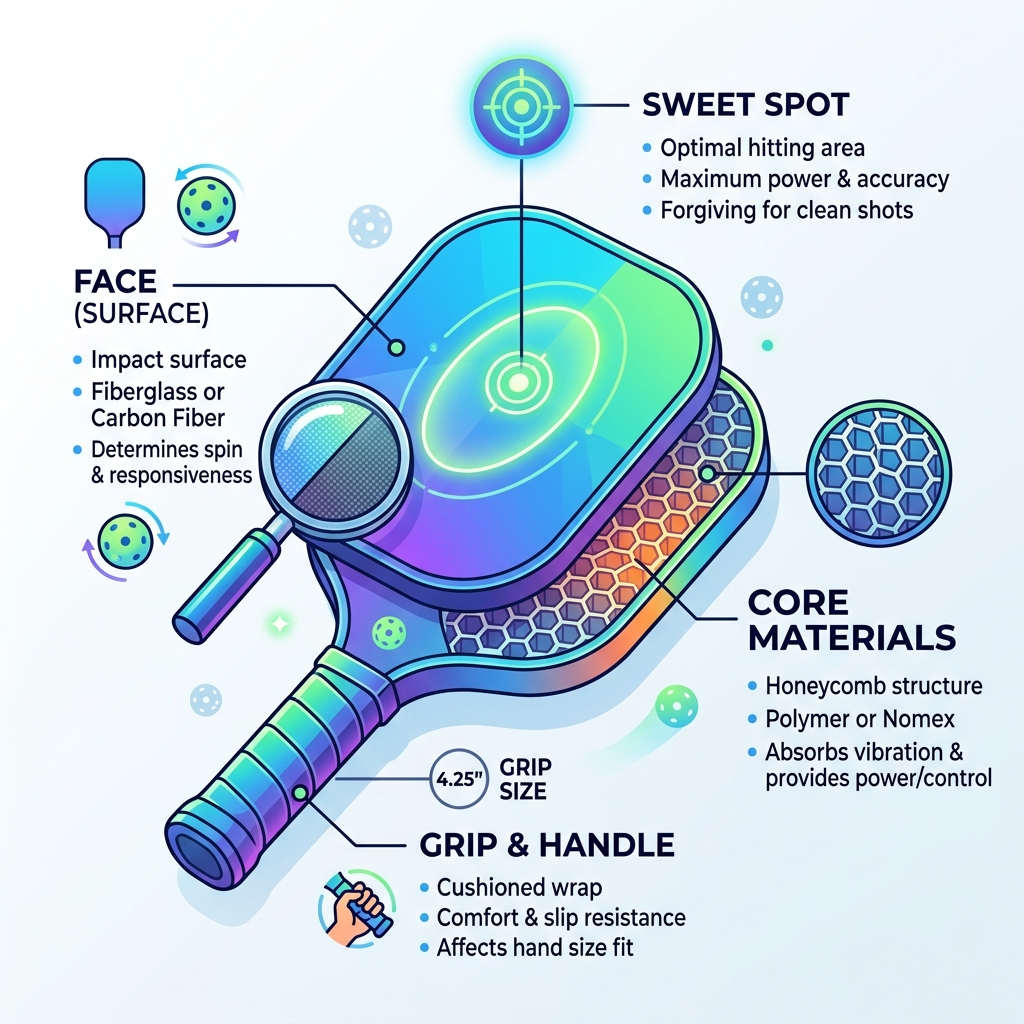
For a beginner, a forgiving paddle means that even if you don’t hit the ball perfectly in the center, the paddle helps compensate, keeping the ball in play. We look for a large “sweet spot”—the area on the paddle face that produces the most predictable and solid shot.
The most critical technical specs for a starter paddle include:
- Weight Range: Staying between 7.5 and 8.0 oz is the “gold standard” for new players.
- Core Material: Polymer honeycomb is the industry favorite because it absorbs energy, giving you a softer feel.
- Face Material: Fiberglass (also called composite) is often better for beginners than graphite because it provides a bit more “pop,” helping you get the ball over the net with less effort.
- Thickness: A 16mm core is generally preferred for its stability and vibration reduction, though some recreational paddles use 10mm or 12mm for a lighter feel.
- Shape: A “widebody” shape (usually around 8 inches wide) provides the largest hitting surface.
- USAPA Approval: If you ever want to play in a local tournament, ensure your paddle is approved by USA Pickleball.
For more in-depth information on what goes into these tools, check out our guide on decoding pickleball paddle materials for beginners.
Selecting the Best Pickleball Paddles for Beginners Based on Weight
Weight is arguably the most important factor when shopping. If a paddle is too heavy (over 8.5 oz), it can lead to “pickleball elbow” or wrist fatigue. If it’s too light (under 7.3 oz), you might find yourself swinging too hard to generate power, which ruins your accuracy.
We recommend staying in the 7.4–7.8 oz range for the best results. This weight offers excellent maneuverability at the kitchen line (the area near the net) while still providing enough mass to drive the ball deep. For those specifically looking for comfort, navigating pickleball paddle weights is a great way to ensure you don’t pick a “clunker” that hurts your arm.
If you are a senior player or simply have smaller hands, you might lean toward the lighter end of this spectrum. You can find more specific advice in our lightweight-pickleball-paddles-a-guide-for-seniors/ article.
Why Grip Size Matters for the Best Pickleball Paddles for Beginners
Imagine trying to play tennis with a broomstick—that’s what the wrong grip size feels like. For most beginners, a 4.25-inch grip circumference is the “sweet spot.”
If the grip is too small, the paddle might twist in your hand. If it’s too large, it can strain your forearm muscles. A standard handle length of about 5 inches is ideal as it provides a familiar feel for those coming from other racket sports. To get the perfect fit, we recommend measuring from the middle crease of your palm to the tip of your ring finger. For a deeper dive, read our article on understanding pickleball paddle grip size for seniors.
Top Rated Beginner Pickleball Paddles Reviewed
Now, let’s look at the specific models that consistently rank as the best pickleball paddles for beginners. These paddles have been selected for their durability, ease of use, and value for money.
| Paddle | Avg Weight | Core Thickness | Face Material | Price (Approx) |
|---|---|---|---|---|
| JOOLA Beacon | 7.8 oz | 10mm | Fiberglass | $35 – $70 |
| Friday Original | 8.2 oz | 16mm | Carbon Fiber | $69 (or 2 for $99) |
| JOOLA Essentials | 8.2 oz | 12mm | Fiberglass | $60 |
| Gingham Starter | 7.7 oz | 12mm | Fiberglass | $36 – $52 |
| SLK NEO 2.0 | 7.5 oz | – | Composite | $80 (Set) |
| Pegasus Jelly Bean | 7.8 oz | 16mm | Carbon Fiber | $90 |
Best Overall Performance and Value
The JOOLA Beacon Pickleball Paddle (formerly known as the Journey) is an outstanding entry-point into the sport. At 7.8 oz, it hits that maneuverability “sweet spot” perfectly. It features a 10mm Response Honeycomb Polymer core that reduces vibration—a huge plus for beginners who are still finding their rhythm.
What makes the Beacon special is its multi-layer fiberglass surface. This gives it a bit more “pop” than a standard wood or cheap plastic paddle, allowing you to hit deeper shots without swinging like a lumberjack. It’s also USAPA-approved, meaning you can take it from your first lesson all the way to your first tournament.
For those who want a slightly more “pro” feel at a beginner price, the JOOLA Journey Pickleball Paddle offers similar specs with a focus on all-around performance.
Best Budget-Friendly Sets and Deals
If you are starting out with a partner or a friend, sets are the way to go. The SLK NEO 2.0 by Selkirk is a legendary starter set. It usually includes two paddles, balls, and a bag, making it a “one-and-done” purchase.
However, if you want “pro-grade” materials on a budget, the Friday Pickleball Paddle is currently disrupting the market. They often offer a Friday Pickleball 2-for-1 deal where you can get two thermoformed carbon fiber paddles for around $99. Carbon fiber is usually reserved for expensive paddles, but Friday has made it accessible for beginners. The 16mm thickness provides incredible control, helping you keep those pesky “pop-ups” to a minimum.
Another stylish and effective option is the Gingham Starter Pickleball Paddle. It’s lightweight (7.7 oz) and features a durable fiberglass surface with a high-quality foam grip inspired by the golf and tennis industries.
For the “advanced beginner” who wants a paddle that will last through their transition to intermediate play, the Honolulu Sword & Shield J2NF and the 11SIX24 Pegasus Jelly Bean are fantastic choices. The Jelly Bean, in particular, is praised for its massive sweet spot and spin potential.
How to Choose Your First Paddle and Avoid Common Mistakes
We see it all the time: a new player buys the cheapest wooden paddle they can find, only to realize two weeks later that it feels like hitting a ball with a frying pan.
When searching for the best pickleball paddles for beginners, avoid these common pitfalls:
- Buying Wood: Unless you are on an extremely tight budget, avoid wooden paddles. They are heavy, have no “feel,” and can cause wrist pain.
- Ignoring Weight: Don’t just pick a paddle because it looks cool. If it’s over 8.5 oz and you aren’t a former power-lifter, it’s likely too heavy.
- Spending Too Much: You don’t need a $250 pro paddle yet. A quality paddle in the $60–$120 range is more than enough.
- Skipping USAPA Approval: Even if you think you’ll never play a tournament, it’s better to have an approved paddle just in case.
If you are still feeling unsure, we have a guide on how to choose your first pickleball without losing your mind and the ultimate guide to picking your first pickleball paddle.
Matching Paddle Shape to Your Background
Your sports history can help you pick the right shape.
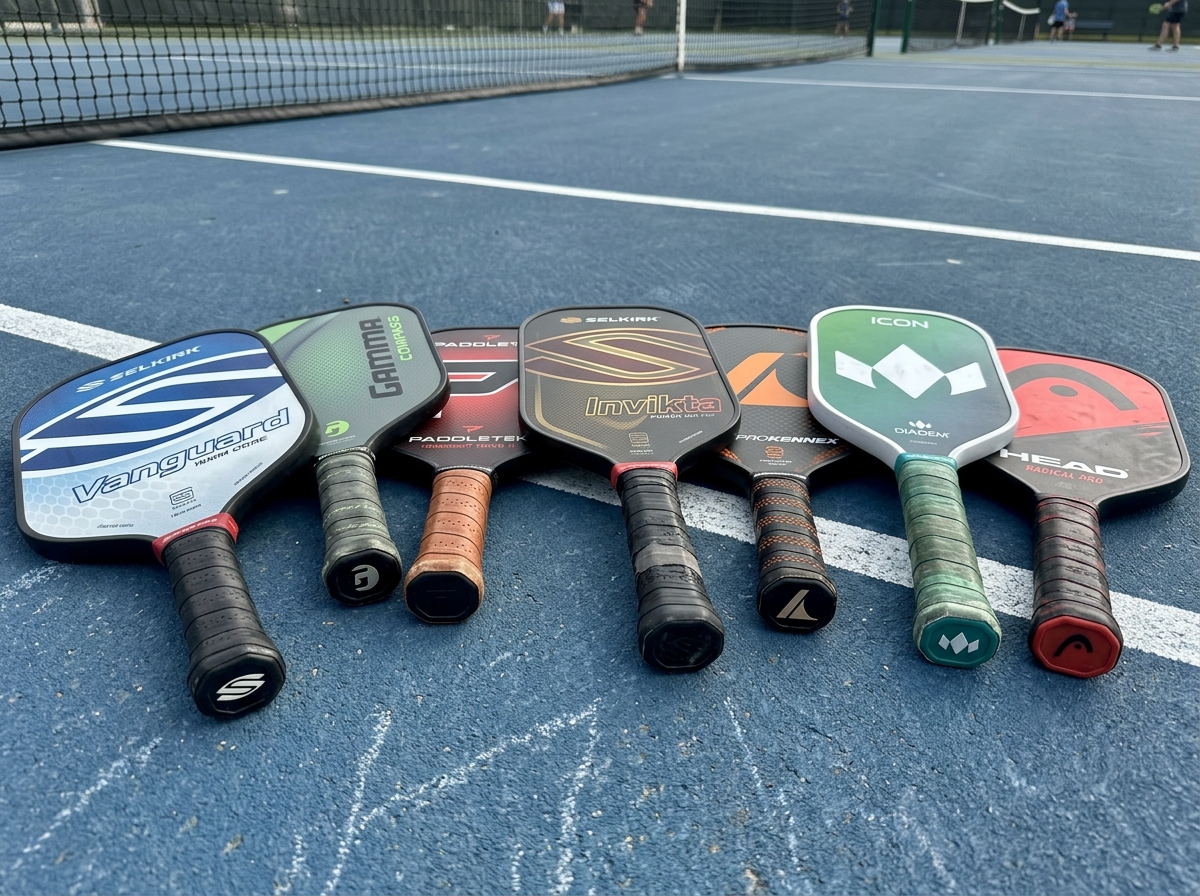
- Tennis Players: You might prefer an “elongated” shape (like the Selkirk Invikta style) because it provides a longer handle for two-handed backhands and a bit more reach.
- Ping-Pong Players: You will likely love a “widebody” or “traditional” shape (like the JOOLA Epic style). These paddles have a larger sweet spot and feel more familiar to those used to a smaller paddle.
For more tips on tailoring your grip to your physical needs, see our advice on optimizing pickleball grip for senior players.
Customizing Your Gear for Better Play
As you get better, you might want to “tune” your paddle. You don’t need to buy a new one! You can use lead or tungsten tape to add weight to the edges, which increases stability and power.
We’ve written extensively about this in our beginner guide to customizing your paddle with weight tape and our review of top-rated paddle tuning tapes. Adding an “overgrip” is another cheap way to increase comfort and sweat absorption.
Frequently Asked Questions about Beginner Gear
Is a 14mm or 16mm paddle better for new players?
For 90% of beginners, 16mm is the better choice.
- 16mm (Thick): Provides more control, absorbs more vibration (easier on the joints), and is more “forgiving.” It helps you keep the ball in the court.
- 14mm (Thin): Provides more “pop” and power but is harder to control. Beginners often struggle with thin paddles because they accidentally hit the ball too far.
How much should a beginner spend on a pickleball paddle?
Expect to spend between $60 and $120.
- Under $50: You’ll find “starter” paddles that are okay for a few games, but they often lack the polymer cores that make the game enjoyable.
- $60–$120: This is the “sweet spot” where you get high-quality fiberglass or carbon fiber faces and durable cores.
- Over $150: These are pro-level paddles. They are great, but a beginner won’t necessarily be able to utilize the advanced tech yet.
When should I upgrade to an intermediate paddle?
Most players look to upgrade once they reach a 3.5 skill rating. You’ll know it’s time when:
- You can consistently keep the ball in play during long rallies.
- You start wanting more “spin” to keep your opponents on their toes.
- Your current paddle feels “mushy” or you’ve worn down the grit on the surface.
Conclusion
Finding the best pickleball paddles for beginners is about balancing weight, control, and price. Whether you go with the all-around performance of the JOOLA Essentials Pickleball Paddle or the incredible value of the Friday 2-for-1 deal, the most important thing is to get out on the court and start swinging!
At Voce Economia, we are dedicated to providing beginner-focused guides to help you navigate racket sports without breaking the bank. Once you’ve picked your paddle, don’t forget to shop all pickleball equipment to find the right balls, bags, and accessories to complete your kit.
See you on the courts!
