
Stop Blaming the Wind and Buy These Consistent Pickleball Balls
Why Bounce Consistent Pickleball Balls Make or Break Your Game
Bounce consistent pickleball balls are the single biggest factor most beginners overlook when their practice sessions feel frustrating and unpredictable.
Here are the top picks for consistent bounce, fast:
| Ball | Bounce Rating | Best For |
|---|---|---|
| Franklin X-40 Outdoor | 10/10 | Beginners & intermediates |
| Life Time Pro 48 | 10/10 | Advanced, play |
| Vulcan VPRO FLIGHT Gen 2 | 9/10 | Speed + consistency combo |
| Selkirk Pro S1 | 8/10 | Cold weather, max durability |
You miss a shot. You blame your paddle. Then you blame the wind.
But often, the real problem is simpler: your ball is dead.
Pickleballs lose their shape over time. When that happens, bounces become unpredictable. Shots that should land in bounce long. Dinks that should sit up go flat.
For beginners especially, this makes learning the game much harder than it needs to be. You can’t build muscle memory around a ball that behaves differently every game.
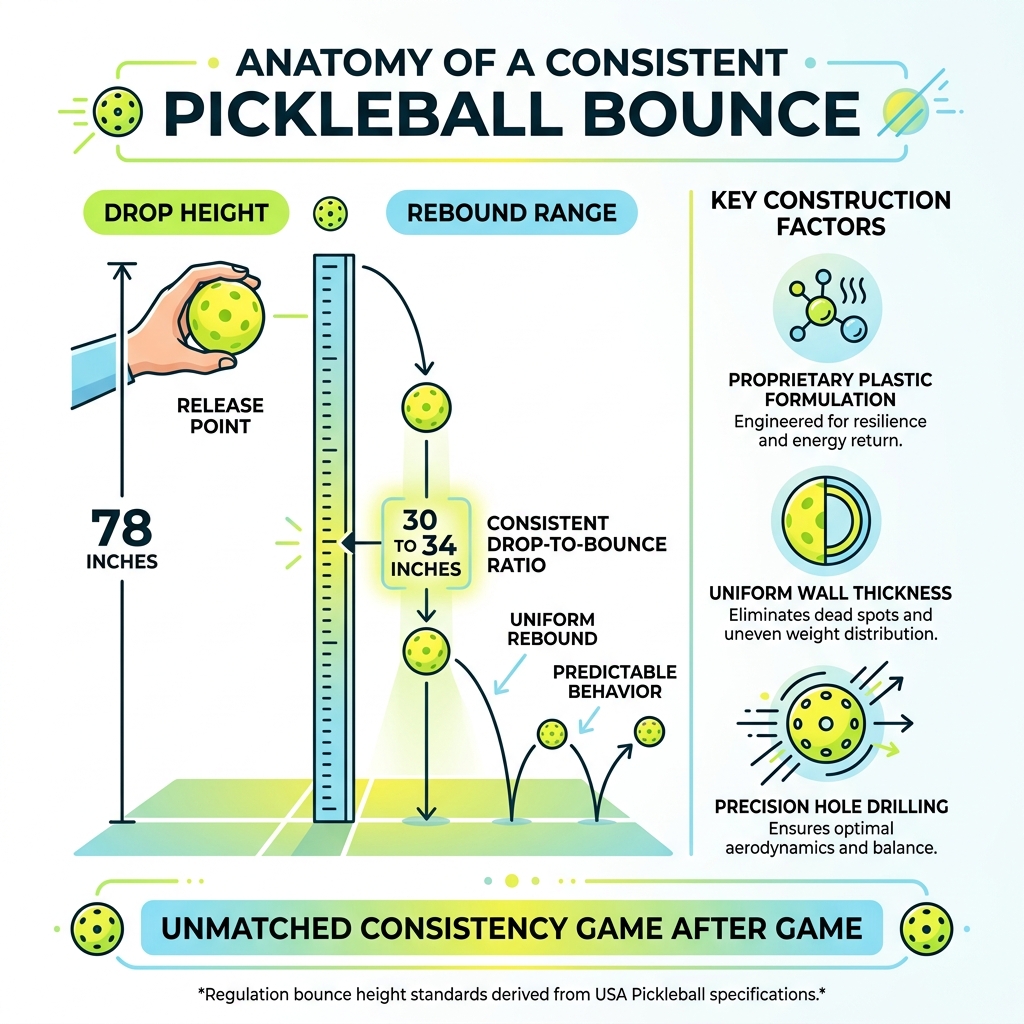
The good news? A handful of balls on the market are specifically engineered to bounce the same way, game after game. They meet the official USA Pickleball regulation bounce height of 30 to 34 inches from a 78-inch drop — and they hold that standard far longer than budget options.
This guide breaks down exactly which balls deliver that consistency, why some fail faster, and how to pick the right one for your skill level.
The Science Behind Bounce Consistent Pickleball Balls
To understand why one ball feels like a “rock” and another feels like a “marshmallow,” we have to look at how they are made. Not all plastic spheres are created equal. The manufacturing process is the DNA of a ball’s performance.
Manufacturing: Rotational vs. Injection Molding
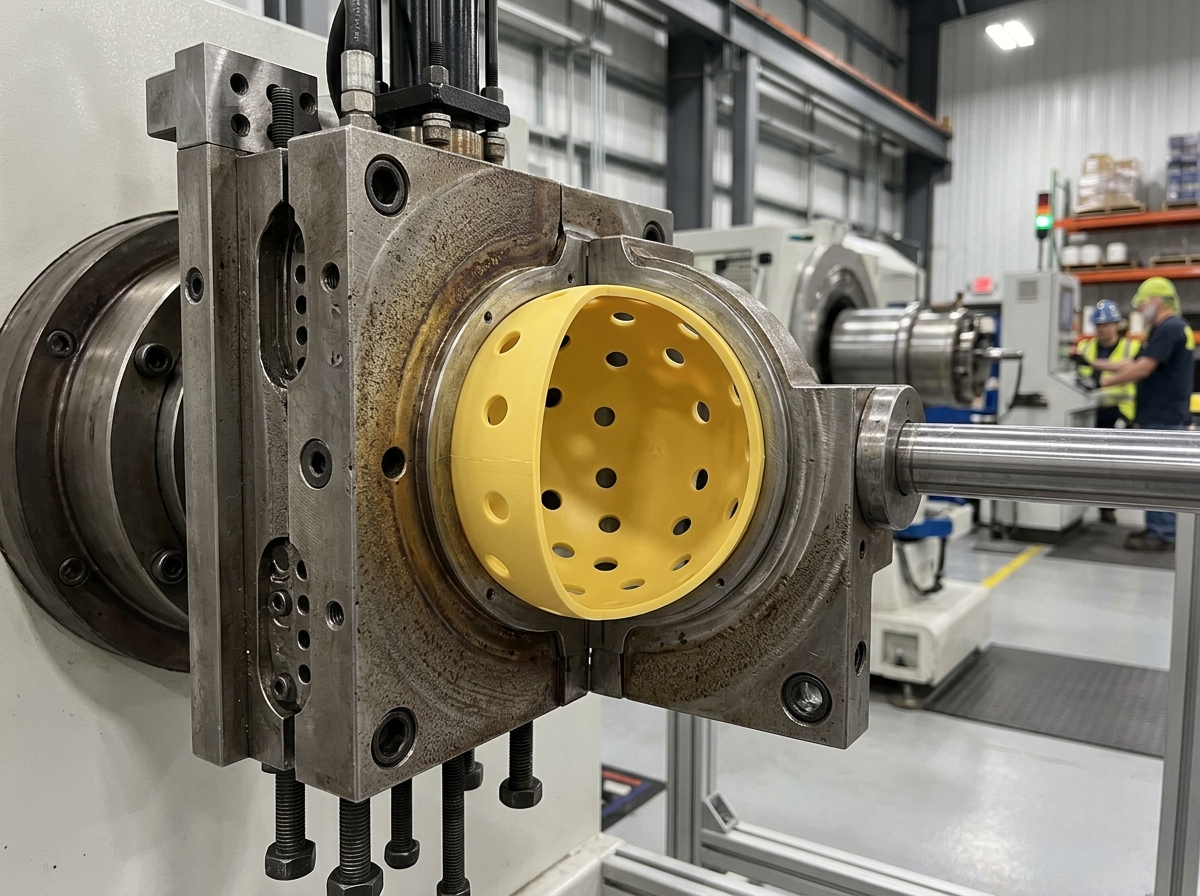
Most high-end bounce consistent pickleball balls are made using rotational molding. This process involves a single, seamless shell that is heated and rotated until the plastic is perfectly distributed. Because there is no seam, these balls are “tanks”—they stay round longer and are less likely to warp or develop soft spots.
In contrast, cheaper balls often use injection molding. This involves two halves being joined together. While more cost-effective, the resulting seam is a natural weak point. If you’ve ever had a ball suddenly “pop” or fly off at a weird angle, it’s often because the seam has failed or the two halves have different densities.
Material Science: PP vs. PE
The type of plastic matters just as much as the shape. Outdoor balls typically use Polypropylene (PP). This is a harder plastic designed to withstand the abrasive nature of concrete and asphalt. It provides that crisp “pop” and a higher bounce. Indoor balls often use Polyethylene (PE), which is softer and more “rubbery,” leading to a lower, more controlled bounce that is easier on the joints but less aerodynamic.
USA Pickleball Technical Specs
To be considered a “true” pickleball, a ball must meet strict technical specs from USA Pickleball. These include:
- Diameter: 2.874 to 2.972 inches.
- Weight: 0.78 to 0.935 ounces.
- Bounce Height: 30 to 34 inches when dropped from 78 inches onto concrete.
| Molding Method | Bounce Reliability | Durability | Best Use Case |
|---|---|---|---|
| Rotational (One-Piece) | High (10/10) | Excellent | Competitive/Tournament |
| Injection (Two-Piece) | Medium (6/10) | Average | Casual/Driveway Play |
Top-Rated Models for Unrivaled Performance
If you want to stop guessing where the ball will land, you need to invest in the industry leaders. Based on 2026 reviews and expert testing, these four models stand above the rest.
1. Franklin X-40 Outdoor Ball: The Gold Standard
The Franklin X-40 Outdoor Ball remains the most popular ball in the world for a reason. It earns a perfect 10/10 for bounce consistency. With a measured bounce height of 33.5 inches, it sits right at the top of the regulation range. It is the official ball of the APP Tour and is beloved for its predictable flight and excellent spin. For most players, this is the safest and most reliable choice.
2. Life Time Pro 48: The New Challenger
The Life Time Pro 48 caused a stir when it was named the official ball of the PPA Tour. It features 48 precision-drilled holes with chamfered edges—a small detail that improves balance and reduces the risk of cracks. Players report a “true, consistent bounce off the ground and paddle every time.” It’s a faster ball, making it a favorite for advanced players who love quick “hands battles” at the net.
3. Vulcan VPRO FLIGHT: Speed and Precision
The Vulcan VPRO FLIGHT (Gen 2) is engineered for “mathematically perfect roundness.” It scores a 9/10 for bounce and is slightly faster than the X-40. It uses an ultra-clean resin formula that helps the ball retain its shape even after hours of aggressive play. If you find the X-40 a bit too slow, the Vulcan is your best alternative.
4. Selkirk Pro S1: The Durability King
If you are tired of balls cracking, the Selkirk Pro S1 is the answer. While its bounce is slightly lower (8/10) compared to the X-40, its durability is a perfect 10/10. It even comes with a 1-year no-crack warranty. For those finding the best pickleball balls for beginners, the Pro S1 is a great investment because it stays round and playable far longer than cheaper alternatives.
How Weather and Surface Impact Reliability
Even the best bounce consistent pickleball balls are at the mercy of the elements. Plastic is a temperature-sensitive material.
The Temperature Factor
In cold weather (below 50°F), plastic becomes brittle. This is when most balls crack. However, cold also makes the air denser, which can affect the ball’s flight. Conversely, in extreme heat, balls can soften, leading to a “mushy” feel and a lower bounce.
The Selkirk Pro S1 and the GATORSTRIKE Quick Strike are specifically noted for their ability to withstand temperature swings without losing their structural integrity. If you play in a region with four seasons, you should definitely stop playing with bad balls that aren’t rated for all-climate play.
Surface Friction and Wear
The court surface acts like sandpaper. Over time, the texture of the ball wears down, affecting how it interacts with the grit on your paddle. A ball that has lost its texture won’t take spin as well, and its bounce will become “slicker” and faster. High-quality balls like the CORE Pro use a reinforced plastic formula to resist this surface wear, maintaining a “true bounce” game after game.
Pro Tips to Identify and Maintain Quality
You don’t need a lab to tell if your equipment is failing. We recommend a few simple habits to keep your game consistent.
The 78-Inch Drop Test
This is the gold standard for testing bounce consistent pickleball balls at home. Hold the ball at eye level (roughly 78 inches) and drop it onto a concrete surface. It should rebound to somewhere between your waist and chest (30–34 inches). If it struggles to reach 30 inches, the plastic has fatigued, and it’s time to retire the ball to the “drill bucket.”
Inspection for “Out of Round”
Hold the ball up to the light and rotate it. You are looking for flat spots or wobbles. Another trick is to spin the ball on a flat table. If it wobbles or moves in a circle rather than a straight line, it is “out of round.” An out-of-round ball will catch the wind differently and bounce unpredictably.
Storage and Rotation
- Avoid the Trunk: Extreme heat in a parked car can warp the plastic. Store your balls in a climate-controlled area.
- Rotation Strategy: Don’t play with the same ball for five hours straight. Rotate through a pack of 3 or 4 during a session. This allows the plastic to “rest” and prevents localized heat buildup from hard hits.
- Cleaning: A simple wipe with a damp cloth to remove court dust can actually improve the ball’s grip on the paddle and the ground.
For more beginner-friendly maintenance tips, check out our guide on finding the best pickleball balls for beginners-2.
Frequently Asked Questions About Reliable Equipment
Why do some bounce consistent pickleball balls lose their pop?
The primary culprit is material fatigue. Every time you hit the ball, the plastic deforms and then snaps back into shape. Over thousands of hits, the polymer chains in the plastic start to break down. The ball loses its elasticity, resulting in a “dead” sound and a lower bounce. Micro-cracks, often invisible to the naked eye, also allow air to escape or change the structural tension of the shell.
How to test for bounce consistent pickleball balls at home?
Beyond the drop test, you can perform a “squeeze test.” Press firmly on the poles of the ball. A consistent ball should offer uniform resistance. If one side feels softer than the other, the wall thickness is uneven, which will lead to “dead” bounces. Always test on concrete, as asphalt or wooden gym floors will absorb more energy and give you an inaccurate reading.
Are outdoor balls more reliable than indoor balls?
In the modern game, yes. Outdoor balls (40-hole pattern) are made of harder plastic and are heavier, making them more wind-resistant and durable. Interestingly, many players now prefer using outdoor balls on indoor courts because modern indoor surfaces (like those at dedicated pickleball facilities) are often just as hard as outdoor courts. The 40-hole design provides a more consistent, faster flight that advanced players prefer.
Conclusion
At Voce Economia, we believe that your gear should work for you, not against you. Investing in bounce consistent pickleball balls is the fastest way to remove “luck” from your game. Whether you choose the industry-standard Franklin X-40, the pro-level Life Time Pro 48, or the indestructible Selkirk Pro S1, you are making an investment in your own improvement.
Don’t let a $3 piece of plastic ruin a $200 paddle’s performance. Match your ball to your environment and your skill level, and you’ll find yourself blaming the wind a lot less often.
For more insights on upgrading your game, check out our More info about equipment page!
