
Why Light Pickleball Balls Control Makes or Breaks Your Game
Light pickleball balls control is the single biggest factor separating frustrating beginner sessions from satisfying, consistent rallies on the court.
If you just want the quick answer, here are the top light pickleball balls known for control:
| Ball | Weight | Holes | Best For |
|---|---|---|---|
| Jugs Sports Indoor | 0.80 oz | 26 | Budget indoor practice |
| Gamma Photon Indoor | 0.85 oz | 26 | Quiet indoor play |
| Franklin X-40 Outdoor | 0.92 oz | 40 | Outdoor true flight |
| Onix Pure 2 Outdoor | 0.935 oz | 40 | Wind resistance outdoors |
Lighter indoor balls (0.80–0.85 oz) give beginners the most control. Heavier outdoor balls (0.91–0.935 oz) trade some control for wind resistance.
Pickleball is growing at a remarkable pace — participation has jumped by nearly 311% over the last three years according to the Sports & Fitness Industry Association. With millions of new players picking up a paddle, the question of which ball actually helps you learn faster matters more than ever.
For beginners, the biggest struggle isn’t power. It’s control.
Balls that bounce unpredictably, crack after a few sessions, or dart in the wind make learning the basics feel impossible. That’s where lightweight pickleball balls come in.
Lighter balls — especially indoor ones with 26 larger holes — fly slower and more predictably. They give you more time to react, easier spin generation, and a forgiving bounce that rewards soft, precise shots over brute force.
The difference comes down to simple physics: less weight means more maneuverability, and smarter hole patterns mean more consistent flight.
Understanding Light Pickleball Balls Control and Design
When we talk about light pickleball balls control, we are diving into a world of precision engineering. While all pickleballs might look like oversized Wiffle balls to the untrained eye, the materials and weight specifications are strictly regulated to ensure a fair game.
USA Pickleball regulations state that a ball must weigh between 0.78 and 0.935 ounces. While that sounds like a tiny range, in racket sports, a tenth of an ounce is the difference between a ball that floats gracefully and one that drops like a stone.
Material Science and Construction
Most modern balls are crafted from durable plastics such as polypropylene and high-density polyethylene. These materials are chosen because they can withstand the “pop” of a carbon fiber paddle without shattering instantly.
There are two main construction methods:
- Seamed Balls: Two halves are joined together. These are often more affordable but can sometimes have a “weak spot” at the seam.
- Seamless Construction: These balls are rotationally molded as a single piece. We generally find that seamless balls offer a more consistent rebound and superior balance, which is essential for mastering light pickleball balls control.
A well-balanced ball doesn’t just happen by accident. Precision-drilled holes ensure that the weight is distributed evenly across the sphere. If a ball is slightly heavier on one side, it will wobble in the air, ruining your chance at a precise cross-court dink.
Indoor vs. Outdoor: Aerodynamics of Lightweight Balls
The environment where you play dictates the type of ball you need. The primary difference lies in the hole patterns and the density of the plastic.
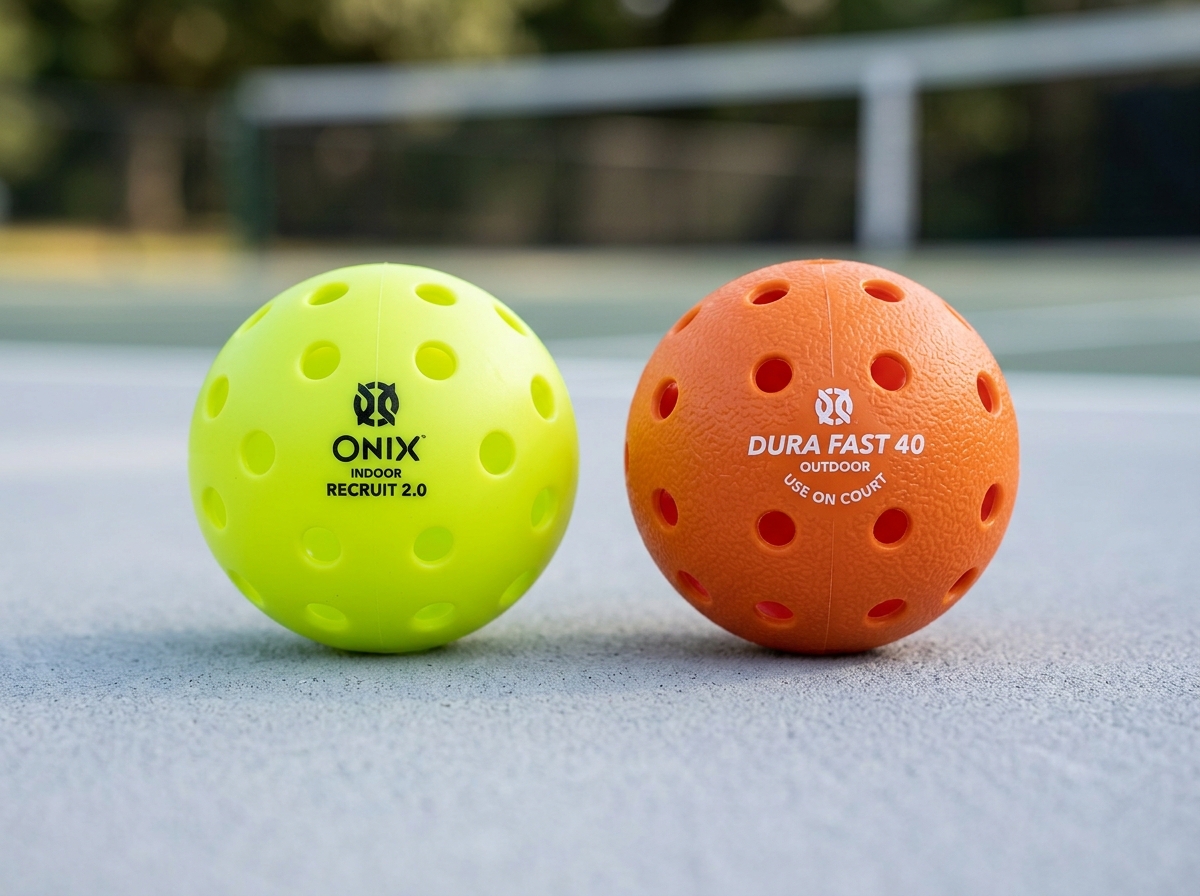
- Indoor Balls: Typically feature 26 larger holes. Because there is no wind inside a gym, the holes can be larger to create more drag, which slows the ball down and emphasizes the “soft game.”
- Outdoor Balls: Feature 40 smaller, precision-drilled holes. These are designed to cut through the wind. A lighter ball with large holes would be blown all over the place outdoors, so outdoor balls are slightly heavier and more rigid to maintain a straight flight.
The Role of Air Resistance
Aerodynamics play a huge role in how much spin you can generate. In our experience, the larger holes on indoor balls allow the air to “grab” the ball more effectively. This makes it easier for beginners to experiment with topspin or backspin. However, these balls are also more sensitive to temperature. In very cold weather, the plastic can become brittle and crack, while extreme heat can make them soft and “mushy.”
Maximizing Light Pickleball Balls Control Indoors
Playing on a finished wood gym floor or a smooth plastic court surface requires a specific touch. This is where the 0.80 oz weight class shines. Because these balls are lighter, they don’t bounce as high or as fast as their outdoor counterparts. This leads to longer rallies and more opportunities to practice your aim.
If you are just starting out, we highly recommend checking out our guide on finding the best pickleball balls for beginners. It breaks down why starting with a lighter, more forgiving ball is the fastest way to build muscle memory.
Another benefit of lighter indoor balls is noise reduction. Standard pickleballs hitting a hard paddle can reach 70-90 decibels—roughly the sound of a vacuum cleaner. Lighter balls, particularly those made of slightly softer materials, produce a lower-pitched “thud” rather than a sharp “pop,” which improves player comfort and keeps the neighbors happy!
Performance Benefits for Different Skill Levels
Does a lighter ball actually make you a better player? The answer depends on your current level.
- Beginners: For those just starting, light pickleball balls control is about forgiveness. A lighter ball moves slower, giving you those extra milliseconds to get into position.
- Intermediates: As you improve, you’ll notice that lighter balls allow for faster reaction times at the kitchen line. Because the ball has less mass, you can redirect it with a flick of the wrist.
- Advanced Players: For the pros, it’s all about precision and fatigue reduction. During a three-hour tournament, swinging at a heavy ball wears you down. A lighter ball allows for high-speed maneuverability without the same level of physical strain.
Strategic Advantages of Light Pickleball Balls Control
Mastering the “soft game” is the hallmark of a great pickleball player. This includes:
- The Dink: A soft shot that lands in the opponent’s kitchen.
- Third-Shot Drops: A lofted shot that forces the opponent to hit upward, allowing you to move to the net.
- Resets: Taking a fast, powerful shot from your opponent and “deadening” it so it drops softly over the net.
Using a lighter ball makes these shots significantly easier to execute. If you’re looking for more tips on how to choose the right gear for these strategies, see our second guide on finding the best pickleball balls for beginners-2.
Equipment Synergy: Paddles and Ball Machines
You can’t talk about ball control without mentioning the paddle. To get the most out of a lightweight ball, many players opt for lightweight paddles (7.3-7.6 oz).
A heavy paddle paired with a very light ball can sometimes feel like hitting a feather with a sledgehammer—you lose the “feel” of the ball. By matching a light ball with a control-oriented paddle like the Selkirk Vanguard Control or the Pro-Line Spin Light, you create a setup that is incredibly agile.
Training with Ball Machines
If you’re serious about your progress, using a ball machine like the Pickleball Tutor Plus Ultra is a game-changer. However, there is a catch: ball diameter matters.
USA Pickleball allows a diameter range of 2.874 to 2.972 inches. Even a tiny difference in size can affect how the machine’s wheels grip the ball. If you mix heavy, large outdoor balls with light, small indoor balls in your machine, your shots will be inconsistent.
- Pro Tip: Always use a consistent set of balls in your machine to ensure a consistent trajectory.
- Oscillation: Look for machines that offer random oscillation to mimic real-world play, helping you practice your light pickleball balls control while on the move.
Maintenance and Selection Tips for Longevity
Even the best balls don’t last forever. Because pickleballs are made of plastic, they eventually lose their “roundness” or develop tiny hair-line cracks.
Storage and Care
To maximize the life of your gear:
- Store in a cool, dry place: Extreme temperatures are the enemy of plastic. Never leave your bag in a hot car trunk.
- Check for Warping: Roll the ball across a flat floor. If it doesn’t move in a straight line, it’s warped and should be tossed.
- Visibility Matters: In dim indoor lighting, vibrant colors like fluorescent yellow or bright orange are much easier to track.
Selection Criteria for Light Pickleball Balls Control
When shopping for new balls, look for seam welding quality. A smooth, barely visible seam usually indicates a higher-quality manufacturing process. If you’re playing for fun, multi-pack value sets (like those from Jugs Sports) are great for budget sessions. However, if you plan to enter a tournament, ensure the balls are USA Pickleball approved so you are practicing with the same equipment used in competition.
Frequently Asked Questions about Lightweight Pickleballs
Do lighter balls break more easily than heavy ones?
Not necessarily. While they are lighter, indoor balls are often made of a slightly more flexible plastic (like vinyl) that absorbs impact. Heavier outdoor balls are made of rigid polypropylene, which can actually crack more easily in cold weather because it lacks flexibility.
Can I use indoor balls for outdoor play in windy conditions?
We don’t recommend it. Because indoor balls have larger holes and less weight, even a light breeze will catch them like a sail. You’ll find yourself constantly overshooting the court or watching the ball drift sideways mid-flight. For outdoor play, stick to the 40-hole design for better wind resistance.
How does ball diameter affect machine performance?
Most ball machines use spinning wheels to eject the ball. A smaller diameter ball has less contact with the wheels, which can result in slightly slower speeds and a lower trajectory. If you notice your machine is “acting up,” check to see if you’ve accidentally mixed different brands of balls with varying diameters.
Conclusion
Mastering light pickleball balls control is a journey of understanding physics, environment, and equipment synergy. Whether you are a beginner looking for a forgiving bounce or an advanced player refining your kitchen line resets, choosing a ball that matches your playing surface is the first step toward victory.
At Voce Economia, we believe that the right gear shouldn’t just be for the pros—it should be accessible to everyone starting their pickleball journey. By focusing on lightweight, control-oriented equipment, you can reduce fatigue, improve your accuracy, and—most importantly—have more fun on the court.
Ready to upgrade the rest of your kit? Check out our comprehensive equipment guides to find the perfect paddle to pair with your new favorite balls!
